


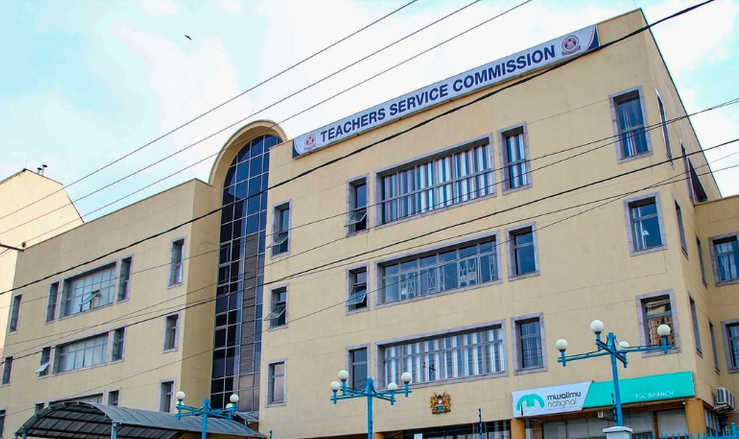
TSC Clarifies Payroll Adjustments: The Truth Behind the Ksh 108 Deduction
In June 2026, thousands of teachers across Kenya were met with an unexpected reduction in their net pay, as their June payslips reflected an increase in Pay As You Earn (PAYE) deductions—most notably an unexplained hike of approximately Ksh 108.
The discovery triggered widespread outcry, with educators questioning the timing of the deduction and the lack of prior communication from the Teachers Service Commission (TSC).
Following days of rising frustration and intense public discourse, the TSC issued a formal statement on Tuesday, June 23, 2026, explaining the rationale behind the adjustment and addressing why a refund of these funds is not on the table.
The Origin: A Systemic “Anomaly”
The TSC clarified that the additional Ksh 108 deduction was not a new tax policy or an arbitrary levy, but rather a corrective measure following a technical error in the payroll system.
According to the Commission, the issue stemmed from the recent reconfiguration of the Integrated Personnel and Payroll Database (IPPD) system.
This massive system update was necessitated by the requirements of the Tax Laws (Amendment) Act, 2024, specifically Section 7, which mandates that employee contributions to the Affordable Housing Levy (AHL) and the Social Health Insurance Fund (SHIF) be exempt from income tax.
As the TSC engineers worked to integrate these new tax-exempt categories into the IPPD, a programming oversight occurred.
While the system was being updated, the National Social Security Fund (NSSF) contributions—which were already designated as tax-exempt—were inadvertently “re-captured” by the system for tax relief purposes.
In simpler terms: The system began granting teachers a “double” tax relief on their NSSF contributions.
This meant that for a period, teachers were effectively paying less in income tax than the law requires because the system was counting their NSSF relief twice.
Why No Refund? The Legal Mandate
When the TSC detected this error during a routine payroll audit, they were faced with a compliance mandate.
The Commission emphasizes that the adjustment in the June payroll was a necessary step to bring the payroll in line with the Income Tax Act.
The Commission’s Stance
Compliance with Law: The TSC maintains that the PAYE amounts deducted in June are the legally correct amounts.
Because the previous months’ deductions were lower than they should have been due to an error, there is no “overpayment” to refund.
Correction of Error: From the perspective of the tax authorities and the TSC, the system was simply “re-aligned” to ensure future tax computations are accurate.
Providing a “refund” would essentially mean the government would be paying back money that was legally owed to the Kenya Revenue Authority (KRA) as tax in the first place.
System Integrity: The Commission stated that the adjustment was essential to ensure the accurate computation of PAYE moving forward, preventing any future discrepancies that could lead to tax compliance issues for individual teachers or the Commission itself.
The Broader Context: Teacher Frustration
The timing of this correction has been particularly sensitive. Teachers are already operating under significant financial strain due to the rising cost of living.
Union officials, who had been vocal in demanding an explanation, noted that while an individual Ksh 108 may seem small, the aggregate effect is massive.
With a workforce of over 300,000 employees, an extra Ksh 108 per person translates to approximately Ksh 32.4 million per month in additional tax revenue.
For a teacher already balancing a tight budget, this reduction—without the benefit of a salary increase to offset it—has been viewed as a significant blow.
The tension was further exacerbated by the fact that many teachers were simultaneously anticipating the implementation of the Phase Two of the 2025–2029 Collective Bargaining Agreement (CBA), which promised salary adjustments to help combat economic pressures.
Moving Forward
The TSC has officially expressed regret for the inconvenience caused by the lack of prior communication.
However, the Commission remains firm that the adjustment is permanent.
For the thousands of educators affected, the “Ksh 108 mystery” has been solved, though the underlying frustration regarding net pay remains.
As the industry moves into the new financial year, both the unions and the Commission are now under pressure to ensure that future payroll updates are communicated with greater transparency to avoid the confusion and mistrust that characterized the June 2026 payroll cycle.
Key Takeaways for Teachers
Is the deduction permanent? Yes. It represents the “corrected” tax amount that should have been deducted all along.
Will there be a refund? No. The TSC views the previous lower tax amounts as a system error, not an over-taxation.
Where can I verify this? Teachers can review their own payslips to see the adjustment, which aligns with the correction of the duplicate NSSF tax relief configuration in the IPPD.
The Teachers Service Commission continues to monitor the IPPD system to ensure that the integration of SHIF and Housing Levy contributions remains compliant with the law without further affecting individual tax liabilities.
Would you like more information on how the tax-exempt status of the Affordable Housing Levy and SHIF works under the new 2026 payroll rules?