


The Teachers Service Commission (TSC) has broken ranks with the Ministry of Education proposal on junior school structure and management.
As the Ministry proposes to merge the institution with the primary school to form one comprehensive school, TSC has taken a different path arguing that will be detrimental.
The Commission has proposed establishment of independent governance and administrative structure for junior schools.
The proposals which were presented to Parliament before the National Assembly Committee on Education, will see junior schools break away from joint leadership with primary schools, giving junior school teachers a major win in their quest for autonomy.
The proposals come after President William Ruto briefly met some junior school teachers during national exam marking exercise last year and promised to address the junior school autonomy issue.
“I have heard you and I think you have a point. I will have a talk with the Teachers Service Commission, which is an independent institution on what they are going to do,” said Ruto after he briefly met teachers stationed at State House Girls High School for KJSEA marking exercise who had pushed him to declare junior school independent.
Under the new structure junior schools which comprise of Grades 7, 8 and 9 would operate independently, no longer under primary school heads who have managed this section for the past three years.
This is a blow to primary school headteachers who have served as Principals of junior schools in acting capacity and who have been pushing for their confirmation.
The headteachers were looking forward for adoption of the proposal by the Ministry of Education that would make primary and junior school one institution headed by one principal and two deputy principal (one for primary and another for junior) which would have opened an opportunity for their confirmation and promotion to job group D1.
These latest reforms by TSC would allow junior schools to appoint substantive principals and deputy principals, creating a need for additional salaries, benefits, and administrative resources.
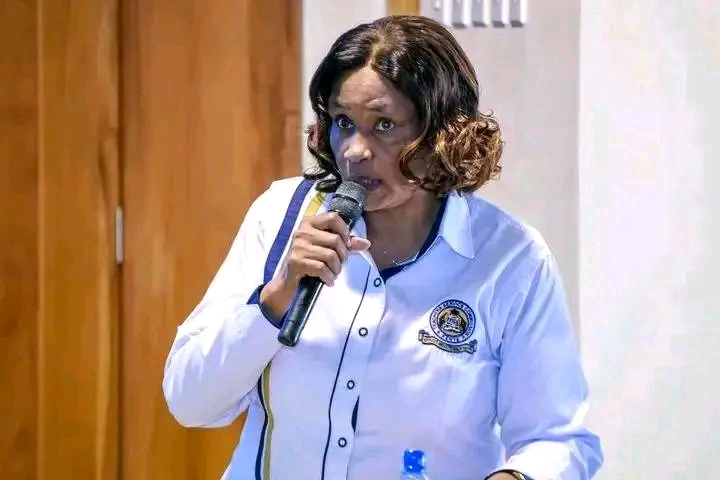
Appearing before the Committee, TSC Acting Chief Executive Officer Evelyne Mitei said the move is intended to strengthen leadership, accountability, and service delivery in junior schools, which are currently managed jointly with primary schools.
Mitei told MPs that the change would require increased budget allocations for personnel emoluments to sustain the new leadership positions.
“In a bid to streghten leadership and governance in junior schools, there is a proposed policy change to provide a new administrative structure,” Mitei stated.
She added that the reforms are necessary to support effective curriculum implementation and ensure proper succession management within schools.
TSC indicated that newly deployed administrators would require extensive training and capacity building to manage the institutions effectively.
Junior school teachers have been accusing primary headteachers of mismanagement of junior school resources and high handedness in management.
Some of the teachers have previously accused primary headteachers of using junior school funds to equip primary schools.
Most junior school teachers are uncomfortable with junior schools being headed by primary headteachers, who they say are incompetent and are less educated.
The autonomy push by junior school seem to be a success after Mitei sudden changes.
Initially TSC had planned to upgrade P1 teachers through a World Bank sponsored programme so they could handle junior school classes under comprehensive school model.
The programme was later abandoned as the Commission now unveils how junior schools will be managed going forward.
Last year the Kenya Union of Post Primary Education Teachers (Kuppet) and Kenya Junior School Teachers Association (Kejusta) led calls for autonomy in the management of junior schools.
The two groups argued that granting junior school independence would not only ease administration but also strengthen the Competency Based Education (CBE).