


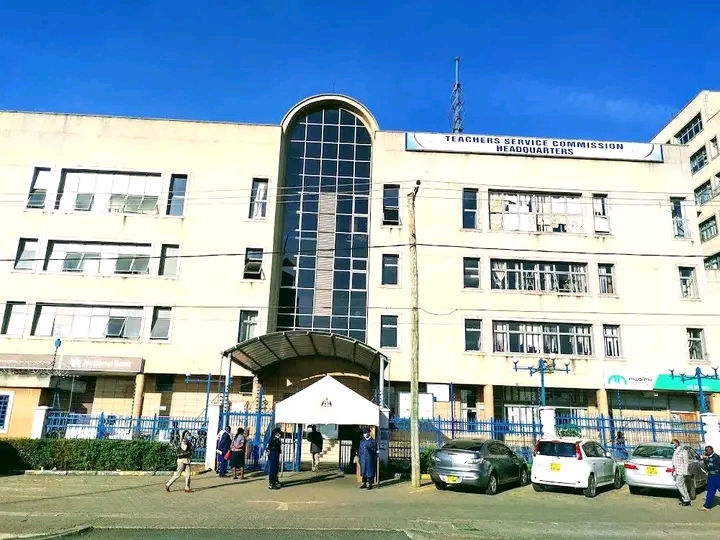
The 2026 TSC Promotion Crisis: TPAD Server Crashes Threaten 78,732 Teachers as Interviews Kick Off
As the Teachers Service Commission (TSC) officially rolled out its highly anticipated promotion interviews on Tuesday, 8th September, targeting primary school educators across the country, a deep-seated administrative crisis has cast a dark shadow over the exercise.
Thousands of Kenyan teachers are currently experiencing a debilitating technical nightmare characterized by persistent TPAD server crashes, widespread system timeouts, and an inability to access, retrieve, and download their mandatory three-year Teacher Performance Appraisal and Development (TPAD) reports.
This technological paralysis has left tens of thousands of educators stranded in frustration, desperately fighting against time to compile physical documentation files required for the ongoing promotion drive.
The stakes could not be higher: the current recruitment cycle aims to fill 34,016 promotion vacancies spanning grades C1 to D4, drawing from a staggering pool of 126,000 applicants, out of which 78,732 teachers were successfully shortlisted for the interviews.
With the panel sessions already underway, the digital gridlock on the government’s appraisal servers threatens to disenfranchise diligent educators through no fault of their own.
The Scale of the Crisis: Shortlisted Numbers Versus System Failures
The ongoing TSC promotion exercise is one of the largest administrative deployments in the history of the commission, designed to reward career progression, diligence, and professional longevity.
Out of an overwhelming pool of 126,000 applicants who vied for career advancement, 78,732 candidates scaled the initial shortlisting phase to face live interview panels competing for 34,016 vacancies.
However, the transition from the digital application phase to the rigorous physical interview verification stage requires an indispensable component: historical appraisal data. According to the TSC guidelines, candidates must produce certified TPAD reports for the last three consecutive operational years—specifically 2023, 2024, and 2025.
These reports are not merely administrative paperwork; they account for a maximum of 10 marks out of one hundred on the official promotion scoresheet, functioning as a definitive mathematical measure of consistent classroom execution and institutional input.
Despite the absolute centrality of these documents, teachers attempting to access the official portal report a system under extreme duress. According to affected educators, the online system routinely struggles to open, displaying endless loading loops or gateway timeout errors.
Even on rare occasions when the portal manages to load, it immediately crashes the moment users attempt to navigate back-end archives to access, retrieve, or download their previous years’ TPAD reports.
“We are spending entire nights staring at frozen screens,” shares a primary school teacher shortlisted for administrative promotion in the Rift Valley region.
“The interviews started on Tuesday, September 8th, yet many of us cannot even download a single term report for 2023 or 2024 because the server drops every connection. Without these papers, our years of hard work risk being written off by a technical glitch.”
The Weight of TPAD Marks on the Promotion Scoresheet
To understand why the server crashes are causing panic across the teaching fraternity, one must examine how the TPAD ratings translate into career advancement.
The TSC promotion framework utilizes a comprehensive scoring matrix where appraisal evaluations directly dictate a candidate’s standing before the interview panel.
TPAD ratings evaluate consistent performance over past appraisal cycles, contributing tangible marks toward the final promotion score.
The official rating scale allocates TPAD marks based on annual performance averages as follows:
- 81% and above: One scores 10 marks
- 61% – 80%: One scores 8 marks
- 41% – 60%: One scores 6 marks
- 21% – 40%: One scores 4 marks
- 1% – 20%: One scores 2 marks
Because promotions are often decided by narrow margins of a fraction of a percent, losing out on a potential 10 marks—or facing panel penalization due to missing historical documentation—can mean the difference between securing a lucrative promotion and remaining static in a job group for years.
Teachers are urgently calling upon the Teachers Service Commission to address this digital menace, extend documentary grace periods, or stabilize server infrastructure to allow them to meet rigorous interview requirements without undue psychological distress.
Comprehensive Guide to Downloading Past TPAD Reports (2023–2025) for TSC Promotion Interviews
Amidst the technical gridlock, educators who manage to secure sporadic windows of server stability must execute a precise technical sequence to bypass browser security blocks and successfully harvest their documents.
Because the interview panels function primarily as exhaustive document verification and validation exercises, the physical file a teacher brings heavily dictates their ultimate success.
The administrative volume and structural complexity of the portfolio scale depending on the target position; while classroom educators present standard foundational records, administrative aspirants must lay out extensive proof of institutional leadership.
This comprehensive guide walks you through the step-by-step process of accessing, downloading, calculating, and certifying your past TPAD reports from 2023, 2024, and 2025, while also mapping out how these documents fit into the broader requirements of the live promotion panels.
Understanding the Importance of TPAD Reports in TSC Promotions
The TPAD system is designed to monitor, evaluate, and improve teacher performance in curriculum implementation, lesson preparation, professional development, learner safety, and co-curricular engagement.
When shortlisting and interviewing candidates for promotions from grade C1 up to D4, the TSC panel does not merely look at your presence in class; they evaluate your consistency, growth trajectory, and institutional contribution over time.
Panels heavily interrogate appraisal metrics to gauge:
Lesson Planning and Delivery Consistency: Regular uploading of professional tools, schemes of work, lesson plans, and lesson notes.
Learner Outcome Trends: How well your students perform in formative and summative assessments.
Professional Conduct and Professional Development: Engagement in Teacher Professional Development (TPD) modules, peer collaboration, and continuous learning.
Administrative and Pedagogical Leadership: How effectively you manage extra responsibilities, club leadership, and institutional duties.
Having gaps in your three-year appraisal history or failing to present certified physical copies can result in immediate disqualification or loss of critical evaluation points during the live panel interview.
Step-by-Step Procedure: How to Print Past TPAD Reports (2023, 2024, 2025)
Navigating the TSC TPAD portal to retrieve historical records from previous years can sometimes trigger browser security warnings due to legacy backend configurations.
Follow this exact technical sequence to bypass these barriers, extract your documents, and prepare them for your interview file:
1. Log in to your TPAD account: Open your web browser, navigate to the official TSC TPAD portal, and enter your credentials (TSC and ID number, password, and security captcha) to access your teacher dashboard.
2. Navigate to Appraisals: On your primary account dashboard, locate and click on the APPRAISALS tab, then select SELF APPRAISAL from the drop-down menu.
3. Access Archived Appraisals: Click on VIEW ARCHIVED APPRAISAL. At this stage, because of security certificate configurations on government legacy archives, your browser will likely trigger a red or yellow warning prompt indicating that the connection is not private or safe.
4. Bypass the Browser Security Prompt: Click on ADVANCED (or “Show Details” depending on your browser). Click on PROCEED (often indicated with text like ‘Proceed to tpad.tsc.go.ke (unsafe)’). Ignore the warning—this is a routine security notification for older backend server directories and poses no threat to your computer.
5. Select Term Appraisals: Once inside the archived records interface, locate the specific years (2023, 2024, and 2025). Click the VIEW APPRAISAL tab positioned on the far right of each individual term appraisal row.
6. Print Each Page: On your computer, press CTRL + P to print each appraisal page to a physical PDF document or directly to your printer. Ensure that the term grades, teaching standards scores, and institutional head comments are fully visible and not cut off by page margins.
Calculating Your Annual TPAD Performance Averages
To successfully work out the figures required to fill in the promotion application portal and complete your summary sheets, you must calculate the average score for each operational year:
- Gather All Terms: Collect your termly scores for a given year (e.g., Term 1, Term 2, and Term 3 for 2023).
- Sum the Totals: Add the final aggregate percentage scores or marks obtained across all three terms of that specific year.
- Divide by Three: Divide the cumulative sum by three to arrive at the precise annual average score.
- Record Accurately: Transfer these verified annual averages into your promotion application portal exactly as calculated. Discrepancies between what you input online and what appears in your physical verified reports can trigger integrity queries during verification.
Once printed, ensure that these reports are physically presented to your Head of Institution (HOI) or Principal for official stamping and signing. Retain them securely in your promotion file.
Documents to Present During Live Promotion Panels
Your TPAD reports form the backbone of your pedagogical proof, but they must be accompanied by a comprehensive physical portfolio. Portfolios must be meticulously organized, sequentially paginated, and officially certified where required. The core documents mandated by panels include:
Original National Identity Card (ID): Serves as the primary legal verification of Kenyan citizenship. Candidates must present both the original document and a clear, legible photocopy.
Original Academic and Professional Certificates: The complete historical sequence of educational background, spanning KCSE certificates, PTE certificates, Diplomas, Bachelor’s Degrees, and Master’s Degrees. Names must match uniformly across all certifications.
Letter of Appointment to Current Grade: Official documentation proving the entry point and tenure in the present grade, verifying that mandatory service requirements have been met.
Latest TSC Payslip: A recent computer-generated payslip confirming active employment status, station codes, and proper integration into the payroll matrix.
Last Promotional Letter: The foundational legal instrument that elevated the educator to their current grade, establishing a clear career trajectory.
Letter Assigning Responsibility (For Administrative Aspirants): Vital for Head of Institution (HOI), Deputy Head of Institution (DHOI), and Senior Teacher candidates. This includes Board of Management (BOM) appointment letters or official TSC acting capacity deployment letters.
Performance Appraisal Reports (TPAD): Mandatory performance records covering consecutive operational years (specifically focusing on 2023, 2024, and 2025) downloaded, printed, and stamped as outlined above.
Evidence of Professional Engagement: Documentation highlighting contributions beyond routine classroom teaching, such as appointments as a TSC TIMEC member, CBC curriculum trainer, CEMASTEA county trainer, KNEC examiner or item developer, KICD curriculum panelist, textbook evaluator, or published academic author.
Co-Curricular Engagement Records: Evidence of active participation, coaching, and leadership in sports, music festivals, science congresses, ball games, and regional or national events.
Final Preparation Tips for Interview Success
As you finalize your file for the 34,016 TSC promotion vacancies, keep your files organized in an expanding file folder with clear dividers matching the checklist above.
Arrive at the interview center early, ensure every photocopy is certified where mandated by law or policy guidelines, and double-check that your 2023, 2024, and 2025 TPAD summaries reflect an upward or stable trajectory of professional excellence.
While the technological hurdle of server crashes has caused immense frustration across the teaching fraternity, proactive system navigation during off-peak hours can salvage vital documentation.
Good preparation remains the ultimate antidote to systemic friction, transforming an intimidating verification panel into a straightforward validation of your career dedication.