


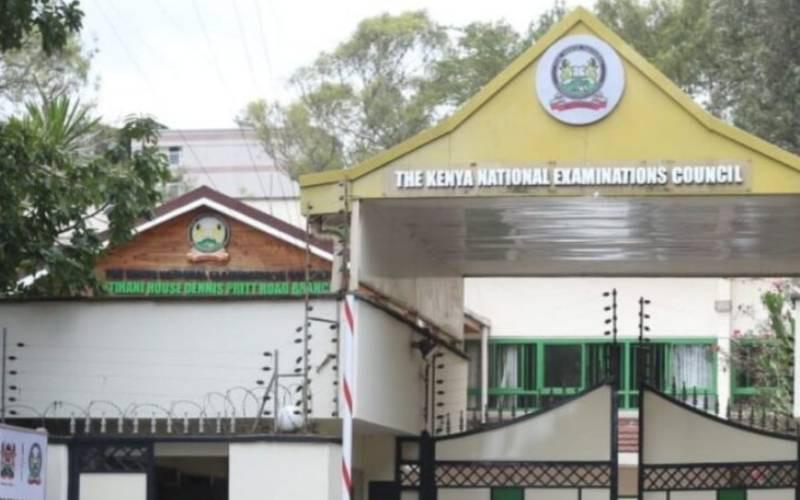
KNEC Activates KJSEA 2026 Marking as Examiners Prepare to Report to Centres
With the 2026 Kenya Junior School Education Assessment (KJSEA) concluded on Friday, October 30, the attention of thousands of teachers across the country has quickly moved from the examination room to the marking centre.
The Kenya National Examinations Council (KNEC) has activated the marking exercise, and examiners are expected to begin travelling to designated centres in the coming days to mark the papers sat by Grade 9 learners.
The assessment, administered for the second time from October 26 to October 30, marks the transition of learners from junior school to senior school.
For many teachers, the end of the exams signals the start of one of the most sought-after seasonal opportunities in the education calendar: the KNEC marking exercise.
From Training to Marking
The marking exercise is the natural next step for teachers who earlier received invitations to KNEC’s physical residential training.
As reported previously, KNEC dispatched formal invitation messages to shortlisted educators for the training of examiners who would grade the KJSEA and the Kenya Certificate of Secondary Education (KCSE).
The training, scheduled for August 16 to 20, 2026, was strictly residential and hosted at institutions such as Machakos Academy, Machakos Girls High School, Machakos TTC, Maryhill Girls High School, Murang’a TTC, Kilimambogo TTC, St. Francis Girls High School, Mang’u High School, Sunshine Secondary School and St. George’s Secondary School.
At those sessions, chief examiners and subject specialists took trainees through standard assessment rubrics, with emphasis on application-based learning, creative expression, logical problem-solving and the fair assessment of learners with special needs.
Teachers were required to meet strict eligibility criteria: active employment with the Teachers Service Commission (TSC) or the Public Service Commission (PSC), at least a Diploma in Education, a minimum of three years’ teaching experience, a clean disciplinary record, endorsement from their head of institution, and an age of 50 years or below.
Each also paid a training fee of Ksh 10,500 and carried proof of payment, a passport photo and an ICT device to the training venues.
Having cleared those hurdles, the trained examiners are now waiting for the next call: the one that sends them to the marking centres.
KNEC has already confirmed that it has enough pool of teachers who have been trained on how to mark the KJSEA, meaning the Council expects the exercise to proceed without delay.
The 2026 KJSEA Marking Centres
KNEC has listed the institutions that will host the marking exercise, with each learning area allocated to a specific centre:
- Kiswahili (Paper 2): Moi Girls School Nairobi
- Christian Religious Education (CRE): St. George’s Girls School Nairobi
- Creative Arts and Sports: Alliance High School
- English (Paper 2): Alliance High School
- Pre-Technical Studies: Pangani Girls
- Social Studies: Maryhill Girls
- Integrated Science: Isinya Girls
- Agriculture: Starehe Boys Centre
- Mathematics: Mang’u High School
Several of these names will be familiar to teachers who attended the August training. Maryhill Girls, Mang’u High School and St. George’s were among the residential training hubs, and they now return as marking centres.
Teachers should confirm their specific reporting centre and dates through official KNEC communication, as these are issued directly to selected examiners.
Why the Exercise Is Attractive
Marking is widely regarded as lucrative, and for good reason. According to KNEC, teacher examiners marking the 2026 KJSEA will earn Ksh 35 per script, plus a basic amount of Ksh 1,500.
The final amount each examiner takes home depends on the number of scripts marked. In addition, examiners will receive Ksh 250 per day as a coordination fee.
A quick illustration shows why the opportunity draws so much interest. An examiner who marks 1,000 scripts at Ksh 35 earns Ksh 35,000 from scripts alone.
Add the Ksh 1,500 basic amount and the daily coordination fee over a two-week exercise, and the total climbs further.
A fast and accurate marker handling a higher volume can earn considerably more. Since pay is tied to output, the exercise rewards both speed and consistency, though accuracy remains the overriding requirement.
Payment figures from the previous cycle underline the point. For the 2025 KJSEA, examiners’ payments (inclusive of the Ksh 15,000 advance paid last year) varied widely by learning area:
- English: Ksh 48,000
- Kiswahili: Ksh 35,000
- Mathematics: Ksh 37,000
- Integrated Science Paper 1: Ksh 42,000
- Integrated Science Paper 2: Ksh 57,000
- Agriculture and Nutrition: Ksh 42,000
- Pre-Technical Studies: Ksh 45,000
- CRE and IRE: Ksh 33,000
- Social Studies: Ksh 36,000
- Creative Arts and Sports: Ksh 75,000
Creative Arts and Sports topped the list, while Integrated Science Paper 2 and English also commanded strong payments.
These figures are from the earlier cycle and should be treated as indicative rather than guaranteed for 2026, since the 2026 rate is Ksh 35 per script and actual earnings depend on the scripts each examiner handles.
Even so, for many teachers, especially those who invested Ksh 10,500 in training, the marking exercise is the stage at which that investment begins to pay off.
How the Marking Will Work
The 2026 KJSEA used two broad question formats. In some learning areas, such as English and Kiswahili Paper 1, candidates answered multiple-choice questions by shading the correct option, A, B, C or D, in the circle provided on their Optical Mark Recognition (OMR) sheets.
Those scripts will be marked by OMR machines, which scan and score the sheets automatically and remove the need for manual marking.
Other learning areas were tested purely through open-ended questions, requiring learners to generate their own answers, and some papers involved creative writing. These are the scripts that will go to human examiners.
This is why the trained teachers are so important: judging a composition, a mathematical working, a scientific explanation or a creative piece calls for professional judgement guided by the marking scheme.
This also explains the emphasis on training in August. Examiners were taught to credit alternative valid methods in Mathematics, to evaluate structure, coherence and creativity in English and Kiswahili, and to assess practical reasoning in science.
Having sat through that preparation, they now move into the real exercise with the standardised rubrics fresh in mind.
KNEC has indicated that the marking will take about two weeks. The Council has planned for it to be done this November, with results released to the public in December.
A Quick Turnaround for Grade 9 Learners
The timeline is deliberately tight. Results are expected in December so that Grade 9 learners can transition smoothly into senior school.
KJSEA candidates will receive their results in a report form, similar to what KPSEA candidates receive, and this will allow them to join Grade 10 in January.
KNEC has also clarified an important point for parents and learners: no certificate will be issued for KJSEA.
Under the Competency-Based Curriculum, learners will receive only one certificate, after the Grade 12 final assessment.
That assessment will lead to the Kenya Certificate of Basic Education (KCBE) and will mark the end of basic education, which runs from PP1 to Grade 12.
KJSEA therefore functions as a progress and placement checkpoint, not a terminal qualification.
What Examiners Should Prepare
Selected teachers can take several practical steps while they await final reporting instructions:
Confirm details through official channels. KNEC communicates with examiners through official SMS notifications and portal updates. Teachers should rely on these and not on rumours or social media posts, which sometimes circulate inaccurate dates or centres.
Carry the essentials. As with the August training, examiners should expect to bring their National ID, TSC or PSC employment card, and personal effects for an extended stay, subject to the specific instructions they receive.
Arrange school and family responsibilities. Because the marking will last roughly two weeks, teachers need to make arrangements for their classes, co-curricular duties and families, and to inform their heads of institution as required.
Revise the marking scheme and rubrics. Teachers who attended the August training should refresh their notes on the assessment criteria so they can begin marking efficiently once the exercise opens.
Beware of scams. KNEC has stressed that payment instructions are communicated only through its official channels. Teachers should not send money to individuals claiming they can secure marking slots.
The Bigger Picture
The marking exercise sits at the intersection of two priorities for Kenya’s education system: credible assessment and teacher professional growth.
For the Council, a well-trained and well-motivated examiner corps is essential to producing results that are fair, consistent and trusted.
For teachers, participation offers extra income, a deeper understanding of how learners are assessed, and insight into common errors and strengths in learner responses, all of which feed back into classroom practice.
The transition to CBC has changed what is being measured and how. Learners are no longer assessed solely on recall; they are expected to apply knowledge, reason critically and express themselves creatively.
Examiners who understand these expectations from the inside are better placed to prepare their own learners in the years ahead.
Looking Ahead
As the dust settles on the 2026 KJSEA, the next few days will be decisive. Teachers who completed the August training are poised for call-up, and those who have already received notification will soon be on the road to centres across Nairobi and beyond, including Moi Girls, Alliance High School, Starehe Boys Centre, Mang’u, Pangani Girls, Maryhill, St. George’s and Isinya Girls.
For the thousands of teachers involved, the journey that began with an invitation to Machakos, Murang’a, Kilimambogo and other training venues is about to reach its most consequential stage.
If the marking proceeds as planned, learners and parents can expect results in December and a smooth move to Grade 10 in January.
In the meantime, the message to examiners is simple: stay alert for official communication, prepare thoroughly, and mark with fairness and accuracy. The credibility of the KJSEA, and the futures of the Grade 9 learners who sat it, rest in their hands.