


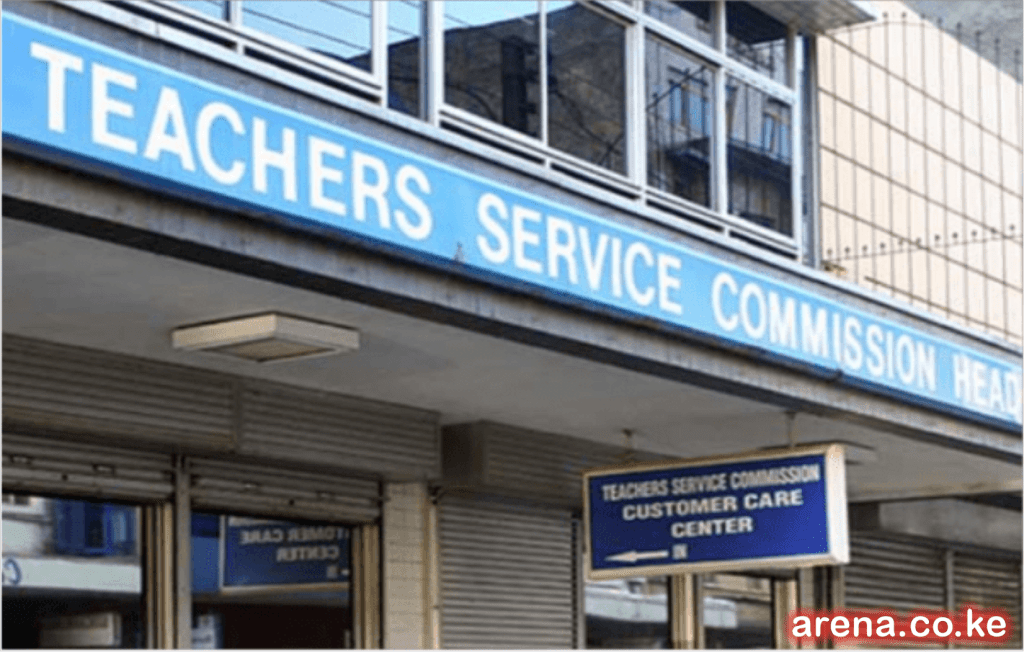
Special School Teachers Left Waiting as TSC Delays Salary Adjustments Four Months After Deployment
Promotion that has yet to reach the payslip
For hundreds of P1 teachers deployed to special schools and units in June and July this year, the excitement of a new posting has given way to frustration.
Four months after reporting to their new stations, many have yet to see the salary adjustments that should come with the move. Their payslips look exactly as they did before.
The deployment was widely welcomed as a progressive step. It placed qualified teachers where they are most needed and offered the affected teachers a financial reward for taking on specialised work. But the delay in effecting the salary changes has turned a good initiative into a source of worry.
Why the money matters
A P1 teacher deployed to a special school or unit is entitled to a special allowance that adds roughly Ksh 8,000 to their net monthly pay. For a profession where many take-home salaries have been squeezed by loan deductions, rising living costs and other commitments, that is a significant sum. It can cover rent, school fees, groceries, or a chunk of a monthly loan repayment.
Many teachers have shrunken payslips, and any salary change is usually welcomed as relief. That is why the delay hurts.
Teachers deployed in June and July have now worked through the third term’s early weeks, and those who took up the new posting in good faith are still waiting for the reward that came with it. Over four months, the unpaid allowance adds up to a sizeable sum for each affected teacher.
Teaching in a special school is also demanding work. Learners with hearing impairment, visual impairment, autism, cerebral palsy, intellectual disabilities or deaf-blindness need individualised attention, specialised teaching skills and enormous patience.
Teachers who step into these classrooms are doing work that requires extra training and extra effort. The allowance exists to recognise that, and when it is delayed, the recognition feels hollow.
Hope that TSC will move fast
The affected teachers have not given up on the commission. Many remain hopeful that the Teachers Service Commission will move with speed to resolve the delay, so they can enjoy the fruits of their labour.
They are asking for clarity on when the adjustments will take effect and, ideally, for arrears to be paid so that no teacher loses out for the months already worked.
Their request is modest. They are not asking for anything beyond what the deployment itself promised. The commission has already done the harder part of identifying, verifying and posting the teachers.
What remains is the administrative step of updating their pay records, and the teachers believe it should not be difficult to complete.
A yearly exercise to fill staffing gaps
The deployment of P1 teachers to special schools and units is not new. Each year, TSC deploys P1 teachers as well as secondary school teachers to special schools and units.
Primary school teachers go to primary special schools, while secondary school teachers go to secondary special schools. The aim is to address the staffing gaps that these institutions face.
As of June 2026, the commission sought to close the persistent staffing gaps that have long affected special needs education (SNE) centres.
That exercise was not an isolated event. It was the second major phase of a broader, sustained initiative that began earlier this year, and it continued efforts launched in 2024 to correct the lopsided distribution of teachers.
Shortages in one place, surplus in another
The reason for the redeployments is easy to see in the numbers. Special needs schools have struggled with acute shortages, with some operating on skeleton staff.
Primary schools across the country, on the other hand, faced a different problem. Previous Commission data indicated that they were holding an excess of about 18,057 teachers.
By reallocating those teachers, the TSC improves the teacher-learner ratio in specialised settings and makes better use of the existing teaching workforce.
Instead of recruiting only new teachers to fill gaps, the commission moves surplus staff to where they are needed. In a country where budgets for new hires are always limited, that is a sensible approach.
The scale of the need has been large. A shortage of 5,362 teachers was previously identified within the SNE sector.
In May 2024 alone, the Commission hired and deployed 1,763 teachers to special schools. Those efforts have been part of a larger undertaking to close the gap.
A phased process shaped by budgets
The road to the June deployment has been phased, largely because of budgetary constraints. The Commission’s trajectory has been steady:
- September 2024: The first phase began for that financial year cycle.
- January 2025: The second phase was carried out, building on the initial momentum.
- June 2025: The third phase was concluded, bringing the total number of teachers targeted for deployment to 3,600 by the end of last year.
The June and July 2026 deployments built on that foundation. The phased approach shows a commission working steadily toward a goal.
It also makes the salary delay more disappointing, because the process has otherwise been well planned. Teachers say the payroll follow-through should match the pace of the deployment itself.
A more personalised deployment process
Unlike the automated, online systems used for junior and senior secondary schools, deployment to special schools is intentionally more personalised and direct.
This ensures that the qualifications and specialisations of teachers match the needs of each institution. A school for learners with hearing impairment needs teachers trained in that area, not just any available teacher.
Primary school teachers holding diplomas in Special Needs Education usually submit their details to their TSC Sub-County offices through their local curriculum support officers (CSOs). To speed up verification, teachers must provide:
- Personal identification: full name and TSC number
- Geographic context: county, sub-county and zone
- Professional standing: current school of service
- Deployment preference: proposed special school or unit
- Contact information: a valid phone number
- Specialisation area: a clear indication of SNE training, such as Hearing Impairment (HI), Visual Impairment (VI), Mental Handicap (MH), Autism, Cerebral Palsy (CP) or Deaf-Blind
Once the details are collected and verified, TSC Sub-County Directors process the deployments. Following recent reforms, this is now often completed instantly after successful verification.
Because of the demand in special schools, teachers are often deployed even when they hold only a result slip because their certificates are not yet ready.
That speed at the deployment stage is exactly why teachers are asking why the pay side has lagged so far behind.
How P1 teachers can qualify for deployment
The demand for qualified special needs teachers means P1 teachers who want to be deployed to special schools have a clear opportunity: train for the Diploma in Special Needs Education. Here is how it works.
About the course
The Diploma in SNE takes two years. It is offered by accredited colleges that administer KNEC exams, which are recognised by various bodies, including the TSC.
The Kenya Institute of Special Education (KISE) is in charge of the training. The course runs in school-based sessions at training centres across the country, including Shimo La Tewa High School, Kericho TTC, Eregi TTC, Migori TTC and the KISE Main Campus.
To apply for the school-based programme, teachers go to application.kise.ac.ke and submit an application during application window e.g. April or September. To qualify for the in-service programme, one must be a TSC-registered teacher who has served for at least two years.
Areas of specialisation
Accredited colleges offer the diploma in several areas: Autism, Emotional and Behaviour Difficulties, Hearing Impairment, Deafblind, Intellectual Disabilities, Gifted and Talented, Visual Impairment, Physical Disabilities, Learning Disabilities and Inclusive Education.
The mid-course assessment
After one year of study, trainees sit a national assessment administered by KNEC. This mid-course assessment is done in April and is electronic (e-assessment). It is key, and trainees are expected to pass or else get a referral.
Trainees therefore need a capable laptop. KNEC’s minimum specifications are:
- Licensed Windows 10 version 22H2 or above
- A 14-inch screen (minimum resolution 1920×1080)
- An integrated webcam
- 256GB SSD storage
- 8GB memory
- Core i3, 6th generation or above
- An internal battery that lasts more than three hours
- IEEE 802.11 wireless capability (ac, g or n)
Principals of registered diploma teacher training colleges are also required to ensure stable internet connectivity and power supply.
What the course costs
The KISE fee structure for the two-year diploma is spread across six sessions.
Year 1 (Sessions 1–3)
- Registration: Ksh 3,000
- Tuition: Ksh 51,420 (25,810 + 16,000 + 9,610)
- Administration: Ksh 9,600 (3,200 per session)
- KNEC exam: Ksh 7,700
- Total for Year 1: Ksh 71,720 (Session 1: 39,710; Session 2: 19,200; Session 3: 12,810)
Year 2 (Sessions 4–6)
- Tuition: Ksh 39,130 (21,180 + 11,400 + 6,550)
- Administration: Ksh 9,600 (3,200 per session)
- KNEC exam: Ksh 10,600
- Total for Year 2: Ksh 59,330 (Session 4: 34,980; Session 5: 14,600; Session 6: 9,750)
Grand total: Ksh 131,050.
For a teacher weighing the investment, the figure is considerable. Set against an allowance of roughly Ksh 7,000 a month, though, the cost can be recovered in under two years once the allowance is actually being paid. That is why prompt payment matters. It affects not only the teachers already deployed but also the confidence of those considering the same path.
What needs to happen now
The case for action is straightforward. The deployment achieved its purpose of putting teachers where they are needed. The allowance is a recognised part of the package. The delay is now four months old, and every additional month deepens the frustration.
Teachers are looking to the TSC for three things:
- A clear timeline for when the salary adjustments will take effect.
- Payment of arrears covering the full period since each teacher’s deployment.
- Better communication, so that teachers are not left guessing about the status of their pay.
If the commission acts quickly, it can restore the goodwill that the deployment initially created. If the delay drags on, the risk is that teachers see special school postings as a burden rather than an opportunity, which would undermine the commission’s own effort to close staffing gaps in special needs education.
Conclusion
The redeployment of P1 teachers to special schools and units remains a worthwhile reform. It tackles real shortages, uses the existing workforce better and brings qualified teachers to learners who need specialised support. But the benefits to teachers must follow the posting.
For those deployed in June and July, the wait has gone on long enough. They have taken up the work and are hopeful that the TSC will move with speed, so they can finally enjoy the fruits of their labour.