


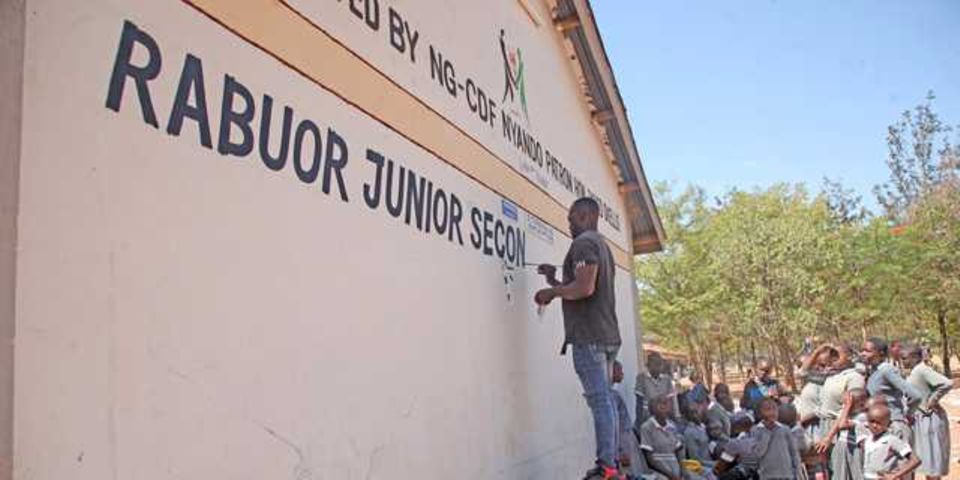
Comprehensive Schools Get Legal Recognition as Primary and Junior Schools Prepare to Merge
Kenya’s education system is set for a major structural change if the Basic Education Bill, 2026 becomes law, with the proposed legislation formally recognizing the comprehensive school model under the country’s new Competency Based Curriculum (CBC) system.
The proposed law, published by the National Assembly on 24 July 2026, seeks to repeal and replace the current Basic Education Act (Cap. 211). Beyond changing how basic education is regulated, the Bill provides a legal framework for an education structure in which primary and junior school will no longer operate as separate institutions where they are housed within the same school setting.
This development gives legal backing to the government’s plan to create comprehensive schools bringing together primary and junior school learners under one institution, one Board of Management (BOM) and one funding arrangement.
Education Cabinet Secretary Julius Ogamba had already indicated that the government would merge primary and junior schools into comprehensive institutions, with the new arrangement expected to begin from the next financial year.
Under the planned model, primary and junior school sections will operate as parts of the same institution rather than functioning as independent schools competing for separate administrative and financial structures.
The Basic Education Bill, therefore, provides an important legal foundation for a transformation that has already been under discussion within the Ministry of Education.
Comprehensive schools formally recognized in the new Bill
One of the most significant features of the Basic Education Bill, 2026 is its recognition of comprehensive schools as part of Kenya’s basic education system.
This is important because the CBC transition has fundamentally changed the traditional organization of schools.
Under the former 8-4-4 system, primary and secondary schools were generally treated as distinct institutions. Primary schools catered for learners in the lower levels while secondary schools began after completion of Class Eight.
The CBC structure has introduced junior school for Grades 7, 8 and 9, creating a new stage between primary and senior school.
The government has increasingly moved toward placing junior school learners within existing primary school environments. In many cases, this has resulted in primary schools hosting both primary and junior school sections.
The new Bill now gives the comprehensive school model formal recognition in law.
A comprehensive school is essentially an institution that brings together different levels of basic education, particularly primary and junior school, under a common institutional framework.
This means that the arrangement will no longer simply be an administrative response to the rollout of CBC. Once implemented under the new framework, the comprehensive school becomes a legally recognized form of educational institution.
Primary and junior schools to operate as one institution
The proposed change could significantly alter the way schools are administered across the country.
Currently, the existence of separate administrative structures has sometimes resulted in primary and junior school sections being viewed as distinct entities even when they share the same compound.
The comprehensive school model seeks to eliminate this separation.
Instead, primary and junior school will be brought together under one institution.
This means that a school with primary and junior school sections would not necessarily have two completely independent institutional structures. The two sections would form part of one comprehensive school.
The move is expected to simplify administration and make it easier for the government to plan staffing, infrastructure, learning resources and other requirements across the institution.
It could also change the way schools account for government support and other resources.
One Board of Management for primary and junior school
A particularly important feature of the planned merger is the issue of school governance.
Under the proposed comprehensive school arrangement, primary and junior school sections sharing an institution will have one Board of Management (BOM).
This is a major departure from treating the two sections as separate institutions.
Instead of maintaining separate governance structures for primary and junior school, the comprehensive school will have a common Board of Management responsible for the institution.
The Board will therefore provide overall governance and oversight for the school, including issues relating to administration, development, infrastructure and the use of resources.
For schools that currently operate primary and junior sections within the same compound, the move could significantly reduce duplication in governance structures.
It could also make decision-making more centralized.
The head of the institution will similarly have responsibility for the overall running of the comprehensive school, while the different sections can retain appropriate academic and administrative coordination within the larger institution.
One funding arrangement
The merger is also expected to have an impact on school financing.
Under the government’s planned model, primary and junior school will have one funding arrangement because they will be regarded as parts of the same comprehensive institution.
This is significant because school funding has traditionally been organized around individual institutions.
With primary and junior schools operating as one comprehensive school, government resources can be planned and allocated around the institution as a whole.
The approach could make it easier to identify the total needs of a school, including classrooms, laboratories, ICT facilities, furniture, sanitation facilities, learning materials and other infrastructure.
It could also reduce situations where two sections of the same institution are treated as completely separate entities when planning development projects.
The exact mechanisms through which the new funding model will work will, however, depend on the regulations and implementation framework developed after the legislation is enacted.
Julius Ogamba had already announced the merger plan
The proposed legislation comes against the backdrop of earlier government plans to reorganize schools around the comprehensive school model.
Education Cabinet Secretary Julius Ogamba had already stated that primary and junior schools would be merged into one institution from the next financial year.
The government’s plan is therefore not simply a new concept introduced by the Bill.
Rather, the Bill gives the comprehensive school model the necessary legal recognition as Kenya transitions fully into the CBC education structure.
Under the planned arrangement, a primary school hosting junior school learners would become a comprehensive institution rather than continuing to treat primary and junior school as separate schools.
The implementation is expected to have wide-ranging implications for school management, staffing, infrastructure planning, financing and accountability.
Why the comprehensive school model matters
The comprehensive school model is particularly important because of the way Kenya has implemented junior secondary education.
When junior secondary education was introduced under CBC, thousands of Grade 7 learners were placed in existing primary schools.
This created a situation in which primary and junior school learners shared facilities but could still be viewed administratively as separate sections.
The government has increasingly sought to resolve this institutional uncertainty.
By formally recognizing comprehensive schools, the proposed Bill provides a clearer legal identity for institutions that accommodate learners across different stages of basic education.
It also reflects the reality that many schools are already operating in this manner.
A legal framework for the CBC system
The comprehensive school proposal is just one part of a much broader transformation contained in the Basic Education Bill, 2026.
The legislation seeks to align Kenya’s education law with the CBC structure.
Basic education under the proposed framework will run from pre-primary through primary, junior school and senior school, with senior school covering Grades 10 to 12.
This represents a significant departure from the legal language and structure associated with the former 8-4-4 system.
The Bill therefore seeks to bring the law into line with the education structure that is already being implemented.
It also recognizes other emerging forms of education, including mobile schools, multipurpose development institutions, academic centres for gifted and talented learners and comprehensive schools.
What happens to school management?
Although comprehensive schools will operate as one institution, school leadership will remain important.
The Bill continues to provide for a Board of Management to oversee schools and a Head of Institution to manage the institution’s day-to-day affairs.
The new arrangement is expected to make school leadership more integrated.
Rather than having separate institutional governance structures for primary and junior school within the same school setting, the comprehensive model creates one overarching institution.
This could also influence the future deployment of school administrators.
As comprehensive schools become larger institutions with learners across several grades, there could be increased demand for additional administrators, deputies and senior teachers to support the head of institution.
The government will therefore need to ensure that the new institutional structure is accompanied by appropriate staffing arrangements.
Free education gets stronger enforcement
The Basic Education Bill also proposes stronger protection for the constitutional right to free and compulsory basic education.
Article 53(1)(b) of the Constitution guarantees every child the right to free and compulsory basic education.
The Bill reinforces this principle by prohibiting public schools from charging tuition fees.
More importantly, it introduces significant penalties for those who violate the provision.
A person or school found responsible for charging illegal tuition could face a fine of up to KSh 1 million, imprisonment for up to three years, or both.
The proposed penalties give the free-education requirement considerably more enforcement power.
Schools would also not be allowed to impose other charges without the required approval.
Such charges must be properly authorized and receipted, while learners cannot be denied access to lessons simply because their parents have failed to pay an unauthorized charge.
The Bill therefore seeks to make illegal levies a serious legal issue rather than merely an administrative violation.
Parents also face legal obligations
The proposed law does not place responsibilities only on schools and government.
Parents and guardians would also have legal obligations to ensure children attend school.
A parent who deliberately prevents a child from attending school for reasons such as employment, income-generating activities, family disputes or cultural practices could face severe penalties.
The proposed law provides for a fine of up to KSh 5 million or imprisonment for up to five years, or both, in specified circumstances.
Parents who fail to enroll children or ensure continued attendance could also face penalties.
The message is clear: access to education is being treated not only as a right but also as an obligation involving government, schools, parents and communities.
Admissions and discrimination
The Bill also proposes changes to the way learners are admitted to schools.
Schools would be prohibited from using entrance examinations to determine admission to basic education institutions.
It would also be illegal to discriminate against learners on grounds such as ethnicity, sex, religion, disability or language.
A child should not be denied admission simply because he or she does not have a birth certificate.
Where a learner is wrongly denied admission, parents would have avenues for seeking redress.
A complaint can be taken to the County Education Board, which is expected to make a determination within 14 days. Further appeals can be made to the Education Appeals Tribunal.
Clearer national and county responsibilities
Another important aspect of the Bill is the attempt to clarify responsibilities between the national and county governments.
The national government, through the Cabinet Secretary, would remain responsible for areas including policy, standards, curriculum, registration and the administration of primary, junior and senior school education.
County governments would continue to have responsibility for pre-primary education.
County Education Boards would provide an important coordination mechanism at the county level.
The boards would include representatives from different education stakeholders and would help coordinate implementation, monitor curriculum delivery and oversee programmes such as school feeding.
Special needs education
The Bill also gives special needs education a stronger legal and institutional foundation.
It links special needs education to the constitutional rights of persons with disabilities and requires government to maintain better data on learners with special needs.
The proposed framework provides for the Kenya Institute of Special Education and Education Assessment and Resource Centres.
The legislation also recognizes integrated schools, allowing learners with special needs to learn alongside other learners where appropriate.
This represents a broader move toward inclusive education.
Stronger school inspection
School quality assurance is another area addressed by the Bill.
The proposed law establishes a statutory office of Director of Schools Inspections, supported by school inspectors.
The inspectors would be empowered to examine areas including curriculum implementation, assessment, financial management and school governance.
This is expected to strengthen accountability and ensure that schools comply with national education standards.
Scholarship and bursary coordination
The Bill also seeks to address the fragmented nature of scholarships and bursaries.
The Cabinet Secretary would be required to establish a coordinated system containing information about scholarship and bursary providers, beneficiaries and amounts allocated.
A central database would help government identify needy learners and reduce duplication.
This is linked to the broader use of the Kenya Education Management Information System (KEMIS) to maintain information on learners and educational institutions.
Transition from the old Basic Education Act
Because the Bill proposes to repeal the existing Basic Education Act, transitional arrangements are necessary.
The proposed legislation provides for existing institutions, assets, employees, pending legal proceedings and other matters to transition into the new framework.
This is particularly important for comprehensive schools.
As the government moves toward merging primary and junior school sections, the transition provisions can help provide continuity and prevent institutions from being left in a legal or administrative vacuum.
The bigger picture: Kenya is moving toward one school structure
The comprehensive school model could ultimately become one of the most visible changes resulting from the Basic Education Bill, 2026.
The shift means that the government is moving away from treating primary and junior school as completely independent institutions and toward a model where the two levels can operate under one comprehensive school structure.
For schools hosting both levels, the practical consequences could include:
- One institution instead of separate primary and junior school institutions.
- One Board of Management overseeing the comprehensive school.
- One funding arrangement for the institution.
- Greater coordination of infrastructure and learning resources.
- Integrated planning for learners across primary and junior school.
- More coordinated administration and school development.
- A clearer legal identity for schools implementing the CBC structure.
The change could also help the government address some of the administrative challenges created by the introduction of junior school.
Conclusion
The Basic Education Bill, 2026 is much more than a technical replacement of Kenya’s existing education law.
It represents an attempt to create a legal framework for the education system that has emerged under CBC.
At the centre of that transformation is the comprehensive school model.
By formally recognizing comprehensive schools, the Bill gives legal backing to a system in which primary and junior school are brought together as one institution rather than continuing to operate as independent schools where they share the same school setting.
This direction had already been signaled by Education Cabinet Secretary Julius Ogamba, who said the government plans to merge the two institutions from the next financial year, with the new comprehensive schools operating under one Board of Management and one funding arrangement.
The proposed law therefore has the potential to turn what has largely been an administrative arrangement arising from CBC into a formally recognized institutional model.
At the same time, the Bill introduces tougher penalties for illegal school charges, strengthens protections for learners, creates clearer government responsibilities, expands the legal framework for special needs education, strengthens inspection and quality assurance, and seeks to coordinate bursaries and scholarships.
If enacted, the legislation will mark a major legal reset for Kenya’s basic education sector — replacing the framework built around the old education structure with one designed around CBC, comprehensive schools and a more integrated basic education system.