


Education Committee Moves to Phase One of Stakeholder Engagement on Seven Education Bills
After hearing from citizens in all 47 counties, the National Assembly Departmental Committee on Education now turns to government agencies, the Teachers Service Commission and umbrella bodies as Kenya’s education reform agenda enters its next stage.
Kenya’s education reform process has moved from the village baraza to the committee room. Having concluded public participation in all 47 counties, the National Assembly Departmental Committee on Education will this week begin Phase One of stakeholder engagement on seven Education Sector Bills.
The new phase builds directly on the county exercise, which closed in Bomet County on Friday, 2nd October 2026, after starting on 14th September 2026.
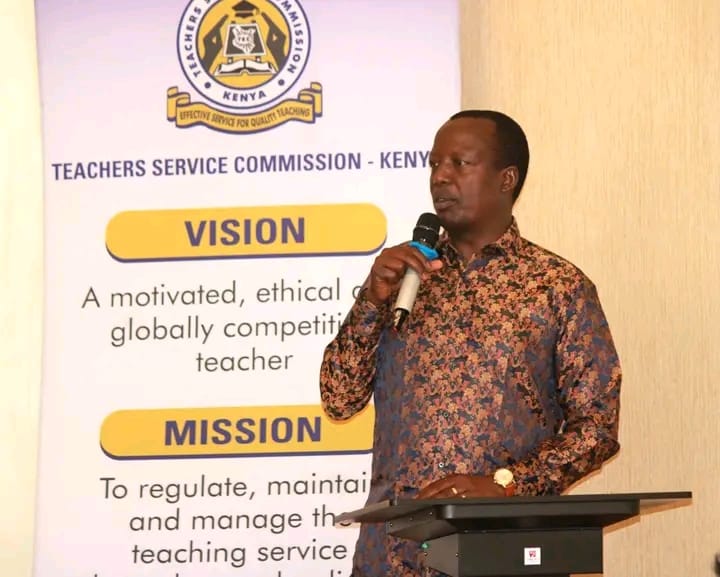
Where the county forums gathered the views of teachers, parents, learners and school heads, this phase brings in institutional voices: umbrella bodies representing Government agencies, non-governmental organisations, the Teachers Service Commission (TSC) and the Ministry of Education.
The aim is to gather further views, recommendations and expert input on the proposed legislation. The Committee will then consolidate everything it has heard and prepare a final report to guide the legislative process.
From Public Forums to Institutional Hearings
The county tour was a rare chance for ordinary Kenyans to shape laws that will govern classrooms for years.
Over roughly three weeks, the Committee received oral presentations and written memoranda from classroom teachers, parents’ associations, school heads, trade unions, students, religious organisations, private school owners and education experts.
Public participation is a constitutional requirement in Kenya’s law-making process, and by visiting all 47 counties the Committee met the expectation that views are gathered from across the country, not only from Nairobi.
Phase One adds another layer. Public forums capture lived experience: what a fee demand feels like to a parent, or what a board decision means to a teacher.
Institutions such as the TSC and the Ministry of Education bring technical knowledge of implementation, costs, staffing and legal coherence. The Committee is, in effect, testing what citizens want against what the system can deliver.
The Seven Bills Under Consideration
The Committee’s work now covers seven pieces of legislation:
- The Tertiary Education, Placement and Funding Bill
- The Pre-Service Education and In-Service Training Bill, 2026
- The Basic Education (Amendment) Bill, 2026
- The Kenya Institute of Curriculum Development (Amendment) Bill, 2026
- The Kenya National Educational Assessments Council Bill, 2026
- The Kenya National Qualifications Framework (Amendment) Bill, 2026
- The Teachers Service Commission (Amendment) Bill (National Assembly Bill No. 64 of 2026)
Taken together, they touch almost every stage of a learner’s journey and a teacher’s career: admission and governance in schools, curriculum design, assessment, qualifications, teacher training and employment, and the funding and placement of students in tertiary institutions.
Because they are interlinked, a change in one bill can affect the others. That is a strong reason for the Committee to hear from bodies that see the whole system.
The Basic Education Bill Remains in the Spotlight
Of the seven, the Basic Education (Amendment) Bill, 2026 has drawn particular attention because of its reach across the school system. Its proposals include:
Structure of institutions. Basic education institutions would be classified as public or private, with a comprehensive school model combining primary and junior secondary school under one institution, a response to the practical realities of the Competency-Based Curriculum.
Governance. County Education Boards would be retained, chaired by the County Commissioner, with the County Director of Education as secretary and unions represented.
The composition of Boards of Management (BoMs) would change, with teacher and student representatives removed, while members would have to declare conflicts of interest.
Powers of the Cabinet Secretary. The Cabinet Secretary for Education would gain expanded powers in managing basic education.
Compulsory education and access. Basic education would be compulsory, parents’ legal obligations would be strengthened, discrimination in admission would be prevented, and admission tests in public schools would be banned.
Learner protection. Learners would be guaranteed re-entry after pregnancy or because of economic circumstances, learners with special needs and disabilities would receive specific legal recognition, corporal punishment would be banned, and heads of institutions would be assigned to follow up on absenteeism to reduce dropouts.
Quality assurance and data. A Director of the school inspectorate would be introduced, with reach to zonal level, alongside greater emphasis on the Kenya Education Management Information System (KEMIS).
Private schools and fees. Registration of private schools would be more tightly regulated, and illegal fee collection would be criminalised as a matter of personal liability.
Several of these proposals are the sort many Kenyans have long called for, notably guaranteed re-entry, recognition of learners with disabilities, the ban on corporal punishment and action against illegal fees.
Others are likely to draw sharper debate, and those are the points on which institutional input may prove most valuable.
Questions Institutions Are Likely to Weigh In On
The removal of teacher and student representatives from BoMs raises the question of whether those closest to the classroom should have a voice in school governance.
The TSC, as the employer of public school teachers, and unions representing them are well placed to comment.
The expanded powers of the Cabinet Secretary raise questions about oversight and the balance between national and county roles. Supporters may see stronger national coordination and enforcement; critics may worry about concentrated authority.
Having the County Commissioner chair County Education Boards may also prompt discussion about the role of the national administration in education governance.
Then there is the practical side. Banning admission tests, tracking dropouts, strengthening inspection and expanding KEMIS all carry resource implications.
Government agencies and the Ministry of Education can speak to what is feasible, at what cost and on what timeline.
Non-governmental organisations, many of which work on access, disability inclusion and girls’ education, can speak to whether the safeguards will work on the ground.
The Teachers Service Commission (Amendment) Bill, National Assembly Bill No. 64 of 2026, carries particular weight in this phase, since the TSC is both a stakeholder and the subject of the legislation.
How the Commission’s mandate would change, and how that fits with the Pre-Service Education and In-Service Training Bill, will be closely watched by teachers across the country.
Where the Process Stands
It is important to remember that none of the seven bills has become law. Public participation and stakeholder engagement inform Parliament’s decisions; they do not replace them. Some proposals may be retained as drafted, others amended, and some possibly dropped.
The road ahead follows the steps outlined after the county exercise:
1. Stakeholder engagement (Phase One). The Committee hears from umbrella bodies, the TSC and the Ministry of Education.
2. A committee retreat. Members consider every submission, from the 47 counties and from institutions, collating and analysing views that will often conflict.
3. Review of the bills. Members identify provisions that need to change in light of what they have heard.
4. Proposed amendments. Where submissions justify it, the Committee proposes amendments before the bills advance.
5. The committee report. The Committee prepares a report of findings and recommendations for the National Assembly.
6. Debate and voting. Parliament proceeds with the remaining legislative stages. Only after these can any bill move toward becoming law.
Why This Phase Matters
Phase One is where public sentiment meets institutional reality. A proposal that sounds sensible in a county hall may look different once the Ministry explains its cost, or once the TSC describes its effect on staffing.
Equally, a measure an agency finds convenient may look weaker once parents and teachers have said how it would affect them.
The Committee’s challenge is to reconcile these perspectives into a coherent report. Its credibility will rest on whether the final text visibly reflects what Kenyans said from Bomet to Mandera and Turkana to Kisumu, as well as what the experts advised. That will be the real test of whether public participation was meaningful.
Staying Engaged
Engagement need not end with the county tour. Teachers, parents, school heads, unions and learners can continue to follow developments by:
- tracking the Committee’s report when it is tabled;
- following debate through parliamentary proceedings;
- engaging their Members of Parliament as the bills move through the House; and
- supporting the umbrella bodies and associations that represent them in the institutional hearings.
Teachers’ unions, parents’ associations and school heads can also continue to make their positions known to legislators, since the most consequential decisions are still to come.
Conclusion
Kenya’s education reform agenda is moving in deliberate steps. The 47-county public participation exercise gave citizens their voice.
Phase One of stakeholder engagement now adds the expertise of Government agencies, non-governmental organisations, the TSC and the Ministry of Education to the Committee’s evidence base.
What follows will decide how the seven bills take final shape: the retreat, the amendments, the report, and finally debate and voting in the House.
Until then, the reforms remain proposals, and stakeholders have good reason to stay informed and engaged.
The outcome will shape how Kenya’s children are admitted, governed, disciplined and taught for years to come, and how its teachers are trained, employed and supported.