


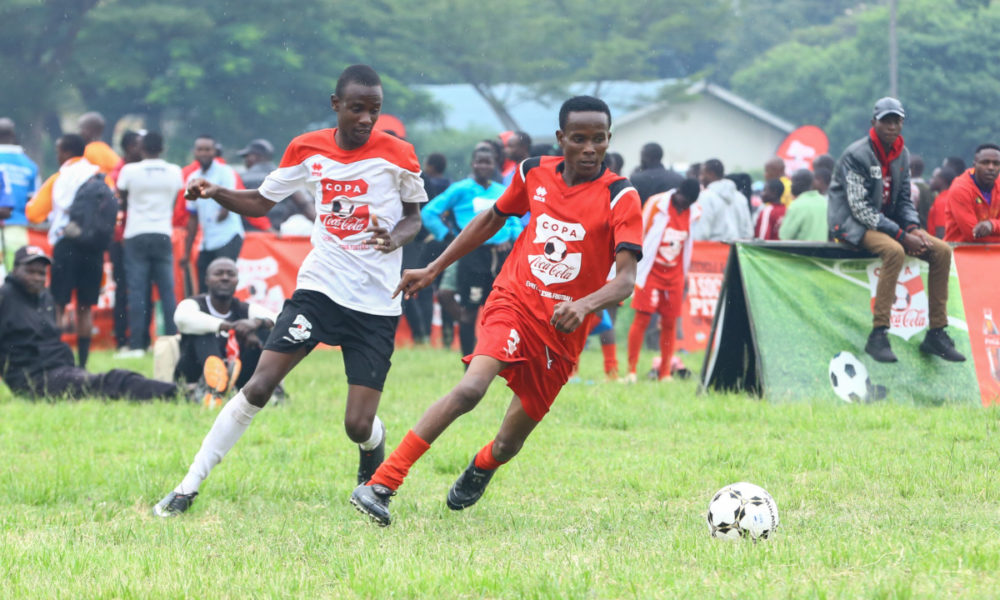
Paradigm Shift: New Sports Selection Rules Combat Corruption in Schools
The landscape of school sports in Kenya is undergoing a radical transformation. In a decisive move to restore integrity and fairness to the national talent pipeline, sports bodies have officially overhauled the selection process.
For years, the dream of young athletes to reach county, regional, and national stages has been marred by persistent allegations of corruption, nepotism, and favoritism.
Now, a new “team-merit” mandate is replacing individual selection, signaling a new dawn for school ballgames.
The Death of Favoritism: A Structural Revolution
Historically, the selection process—often led by games teachers—has been a subject of intense scrutiny.
Critics have long argued that the system was prone to abuse, with allegations suggesting that some selectors prioritized students from their own schools or circles, rather than identifying the most talented individuals.
This practice effectively turned the dream of national representation into a commodity often influenced by personal connections rather than raw skill.
Under the new directives, the paradigm has shifted from “selecting the best players” to “winning the next level.”
By requiring the entire winning team to advance as a unit, the authorities are effectively removing the power of individual selectors to cherry-pick players.
The logic is simple yet profound: the team that wins together, progresses together.
This shift ensures that success is dictated by collective performance on the pitch rather than subjective evaluations made behind closed doors.
By making the team the unit of advancement, the incentive for coaches and teachers to manipulate lineups for personal gain is drastically reduced.
The Primary School Exemption
It is important to note that this rule is currently exempted for primary schools.
Recognizing the developmental nature of primary-level sports, where the focus remains heavily on participation and foundational skills rather than high-stakes competition, authorities have opted to maintain traditional processes for this category, allowing younger children to grow within a more flexible framework.
The Mid-Term Reset: Resuming the Race
As the country enters the final stretch of the school half-term break, anticipation for the return of competition is at an all-time high.
All learners are set to resume their academic and sporting calendars on June 29th, 2026.
Primary and Junior Schools: Upon resumption, the focus will shift to cluster competitions, followed by zonal championships, building on the foundation of their previous inter-school and sub-cluster events.
Secondary Schools: Having successfully completed the sub-county ball games, secondary schools are now preparing to take the next major leap.
Post-mid-term, the focus will be entirely on the county-level championships, where the new “winning team” rule will be the ultimate test of integrity.
Strict Age Eligibility and Integrity Measures
The Ministry of Education has issued a stern, non-negotiable warning regarding the integrity of these competitions.
Age cheating has long been a plague on school sports, often overshadowing the achievements of deserving young athletes.
To combat this, the following age caps are now strictly enforced:
| Category | Age Limit |
|---|---|
| Primary Schools | Under 12 years |
| Junior Secondary | Under 15 years |
| Secondary Schools | Under 18 years |
Adult participation is now officially banned. To ensure compliance, birth certificates remain the only mandatory document for age verification.
The Ministry has made it clear: any teacher found forging or tampering with these documents will face immediate disqualification and will be handed over to the Teachers Service Commission (TSC) for severe disciplinary action.
The 2026 Discipline Roster
According to Mamai Etiang, Secretary General of the Kenya Primary and Junior School Sports Association (KPJSSA), the term is packed with high-stakes talent discovery.
The following table outlines the team composition requirements for the upcoming fixtures:
| Category | Soccer | Volleyball | Netball | Handball | Chess | Basketball |
|---|---|---|---|---|---|---|
| Primary | 22 | 12 | 14 | 14 | 6 (U10/12) | – |
| Junior | 22 | 12 | 14 | 14 | 6 (U13/14) | 6 (3×3) |
A Career-Defining Shift: TSC Recognizes Talent
In a landmark decision to professionalize talent development, the TSC has linked co-curricular excellence directly to career progression.
In a circular dated February 9, 2026, TSC Director of Staffing, Antonina Lentoijoni, mandated the creation of a comprehensive database for teachers who excel in co-curricular roles.
This is more than a administrative task; it is a professional elevation of the role of the games teacher. The TSC now requires accurate, verifiable records for:
- Sports: Coaches, Referees, Umpires, and Technical Officials.
- Arts: Drama/Film directors, producers, and adjudicators.
- Music: Directors and adjudicators of the Kenya National Music Festivals.
- Academics: Advisors and judges for the Kenya Science and Engineering Fair.
Teachers are encouraged to document their contributions from the sub-county all the way to the East African level.
For inquiries, the designated liaison between the TSC and the Ministry of Education is Nairobi Regional Director, Dr. Samuel Marigat.
The 2026 National Co-Curricular Calendar
With the roadmap for the year firmly in place, Ministry of Education released the final schedule for the upcoming national championships:
Term 2 National Games (Thika, Kiambu):
- Clinic: July 25th–26th.
- Action Dates: July 28th – August 1st.
Kenya Music Festivals (Bungoma):
- Action Days: August 2nd–10th; Gala: August 11th–12th.
FEASSA Games (Tanzania):
- Action Days: August 14th–22nd.
East Africa Music, Dance & Drama (Soroti, Uganda):
- Action Days: August 18th–23rd.
As schools prepare for the post-break resumption, the message is clear: the era of “selection by connection” is over.
With the TSC rewarding excellence and the Ministry of Education closing the loopholes for corruption, the 2026 season promises to be the most transparent and merit-based in recent history.