


Defiance at the Center: How Teachers Overwhelmingly Ignored KUPPET’s Exam Boycott Call to Deliver National Assessments
Introduction: A Union Threat Collapses Under Reality
For weeks, the dark clouds of an impending industrial disruption hung heavily over Kenya’s primary and secondary education sectors.
With nearly 3.6 million candidates preparing to sit for their crucial national assessments across the country, the Kenya Union of Post-Primary Education Teachers (KUPPET) issued a fiery battle cry.
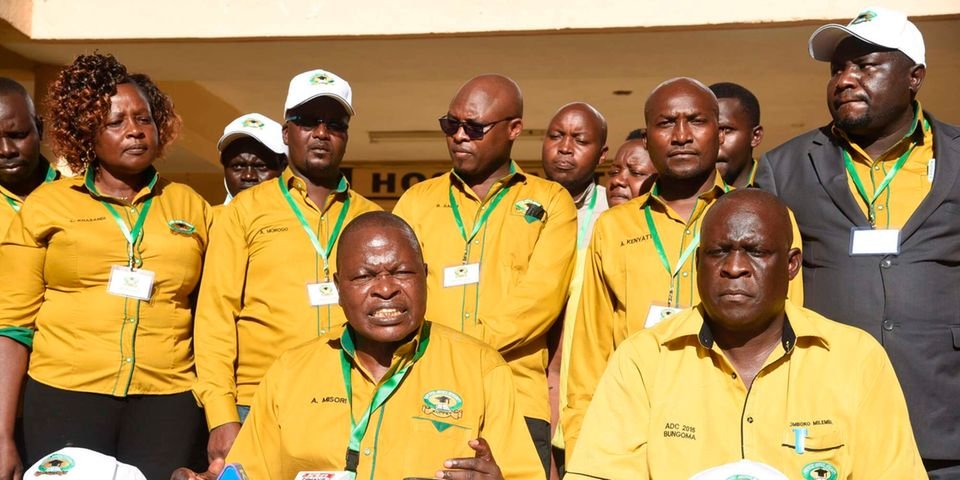
Led by Secretary General Akelo Misori and National Chairman Omboko Milemba, the union’s executive leadership called on its vast membership to immediately boycott all Kenya National Examinations Council (KNEC) invigilation, supervision, standard-setting, and marking duties.
The ultimatum was clear: teachers were instructed to step back from all examination centers until the government and KNEC entered into a legally binding agreement to upwardly revise compensation rates.
Calling the current rates—such as the Ksh 600 paid to supervisors and Ksh 430–510 to invigilators—a “drop in the ocean” and utterly unacceptable, KUPPET demanded a minimum daily rate of Ksh 3,000 for supervisors and significant adjustments across all examination roles.
However, when the moment of truth arrived, the union’s grand strategy suffered a catastrophic flop. On Friday, October 23, as rehearsals for the Kenya Junior School Education Assessment (KJSEA) and preparations for the Kenya Certificate of Secondary Education (KCSE) reached a crescendo, teachers across the nation overwhelmingly ignored the strike call.
Instead of empty classrooms and deserted examination halls, assessment centers in all 47 counties recorded massive turnouts.
Secondary school teachers and junior school educators reported to work in record numbers, effectively extinguishing the threat of an examination crisis and demonstrating where their true priorities lay.
The Anatomy of the Standoff: Pay Disparities and Growing Grievances
To understand the magnitude of KUPPET’s failed boycott, one must examine the deep-seated grievances that fueled the union’s rhetoric in the first place.
For years, the remuneration framework for teachers tasked with administering national examinations has been a hotbed of dissatisfaction.
Current Compensation Structure vs. KUPPET Demands
Under the existing KNEC pay scale, examination officials are compensated using daily rates that many educators feel fail to reflect their immense professional responsibilities and the rising cost of living:
| Examination Role | Existing KNEC Daily Rate (KSh) | KUPPET Demanded Minimum Rate (KSh) |
| Invigilator | Sh 430 – Sh 510 per day | Sh 3,000 per day |
| Supervisor | Sh 630 – Sh 680 per day | Sh 3,000 per day |
| Centre Manager | Sh 500 – Sh 550 per day | Substantial upward review |
| Examiner Allowance | ~Sh 150 per day | Substantial upward review |
| Script Marking | Sh 35 – Sh 75 per script | Minimum Sh 100 per script |
To highlight what they deemed a gross injustice, KUPPET leaders frequently contrasted these modest stipends with the Daily Subsistence Allowances (DSA) paid to other public officers traveling on official duty.
Under the Salaries and Remuneration Commission (SRC) circular of August 2023, public officers in Job Evaluation Grades E1–E5 receive daily allowances ranging from Ksh 16,800 to Ksh 18,200.
Even civil servants in lower cadres, such as Grade B3 to C1, draw Ksh 6,300 per day—a figure that dwarfed the daily earnings of an examination supervisor carrying out high-stakes national duties.
Beyond Remuneration: Welfare, Safety, and Legal Liability
The union’s grievance list extended far beyond the monetary figures. KUPPET officials pointed out that teachers deployed as supervisors and invigilators carry severe legal and professional liabilities.
They are required to transport highly confidential examination materials across rough terrain, secure question papers, enforce strict anti-cheating regulations, and maintain order under intense pressure.
Any breach of security or misplacement of materials can result in formal investigations, loss of employment, or criminal prosecution.
Furthermore, working conditions at marking centers and remote examination posts have historically been a point of contention.
Teachers have routinely reported being forced to sleep on thin, worn-out mattresses in crowded school dormitories, enduring poor sanitation, inadequate meal arrangements, and delayed disbursements of their allowances.
By framing the boycott as a battle for dignity, safety, and fair compensation, Misori and Milemba believed they had tapped into a wellspring of teacher anger that would easily translate into total industrial action.
The Turning Point: Friday, October 23, and the Mass Failure of the Boycott
Despite the fiery press conferences and formal directives issued by KUPPET’s national executive, the union’s call to action crumbled the moment implementation began.
Friday, October 23, was billed as the defining test for the boycott, coinciding with crucial rehearsals for the KJSEA in junior secondary schools and final briefing logistics for KCSE supervisors.
Massive Turnout at Assessment Centres
Instead of heeding the union’s call to stay away, KUPPET members in junior and senior secondary schools turned up in massive numbers across the country:
- KJSEA Rehearsals: In primary and junior secondary assessment centers nationwide, teachers reported early to conduct student briefings, verify register details, and set up examination rooms for the new assessment framework.
- KCSE Supervision: High school teachers assigned as KCSE supervisors and invigilators overwhelmingly attended mandatory briefing sessions convened by KNEC and Sub-County Directors of Education, affirming their availability for the written papers.
- Logistical Continuity: Distribution hubs and security depots operated smoothly, with center managers and assigned security personnel collecting and organizing necessary documentation without interruption.
Reports from regional education offices confirmed that operational capacity reached near 100 percent in virtually all sub-counties. The boycott had collapsed before it could even gain momentum.
Why the Boycott Flopped: Duty, Professional Integrity, and Pragmatism
The dramatic failure of KUPPET’s boycott highlights a growing divide between union rhetoric and the practical realities faced by classroom teachers on the ground. Several key factors explain why educators chose to ignore their union’s directives:
1. Dedication to Candidates Caught in the Middle: Teachers recognized that national examinations represent the culmination of years of hard work for millions of young Kenyans. Disrupting the examination calendar at the eleventh hour would have inflicted immense psychological distress on candidates and their parents. Driven by personal ethics and professional commitment, educators refused to use vulnerable students as bargaining chips in a trade dispute.
2. Professional Accountability and Administrative Pressure: The Teachers Service Commission (TSC) and the Ministry of Education maintained a firm stance leading up to the assessment dates. Participating in national examination management is tied to a teacher’s broader contractual duties as a public servant. Fear of disciplinary action, interdiction, or replacement by contract personnel played a significant role in ensuring teachers reported for duty.
3. Institutional Counter-Measures by KNEC: Learning from past labor disputes, KNEC and government security agencies instituted robust contingency planning. Clear lines of communication were established directly with school heads, center managers, and county education boards, reassuring teachers that logistics, security, and welfare arrangements were being addressed.
4. Disconnect Over Union Strategy: While teachers universally agree that KNEC rates are low and in need of urgent review, many felt that calling for a full boycott days before exams began was reckless and counterproductive. The consensus among many educators was that negotiations with the Ministry, KNEC, and the SRC should continue through formal channels without jeopardizing national exercise operations.
What Lies Ahead: Reforming National Examination Management
While the immediate crisis has been averted and national examinations are proceeding smoothly, the underlying issues raised during the dispute cannot be swept under the rug.
The collapse of the boycott provides short-term relief to KNEC and the Ministry of Education, but it does not diminish the legitimacy of teachers’ long-term concerns regarding remuneration, safety, and working conditions.
To prevent recurring labor friction during future examination cycles, key education stakeholders must collaborate on a sustainable, transparent, and equitable framework:
Periodic Rate Adjustments: KNEC and the SRC must establish a predictable mechanism for reviewing invigilation, supervision, and marking rates to keep pace with inflation.
Upgraded Welfare Standards: Clear standards must be enforced regarding accommodation, food quality, and sanitation at all national marking centers, ensuring examiners are treated with professional dignity.
Timely Allowance Disbursements: Delays in paying teachers after they complete examination duties must be permanently eliminated through automated payment systems.
Comprehensive Risk Management: Enhanced security and transport protocols must be maintained in remote and volatile regions to protect teachers carrying out examination duties.
Conclusion
The massive response of teachers to KNEC examination duties on Friday, October 23, stands as a powerful testament to the resilience and dedication of Kenya’s teaching force.
While KUPPET national officials Akelo Misori and Omboko Milemba sought to leverage the national examinations to force a pay review, teachers chose professional duty and the welfare of 3.6 million candidates over industrial action.
The flop of the boycott guarantees the seamless administration of the KJSEA and KCSE assessments.
However, the message to policymakers is equally clear: maintaining the credibility of Kenya’s national examination system requires not just the goodwill of its teachers, but a genuine commitment to fair compensation, improved welfare, and professional respect for those who safeguard the nation’s educational integrity.