


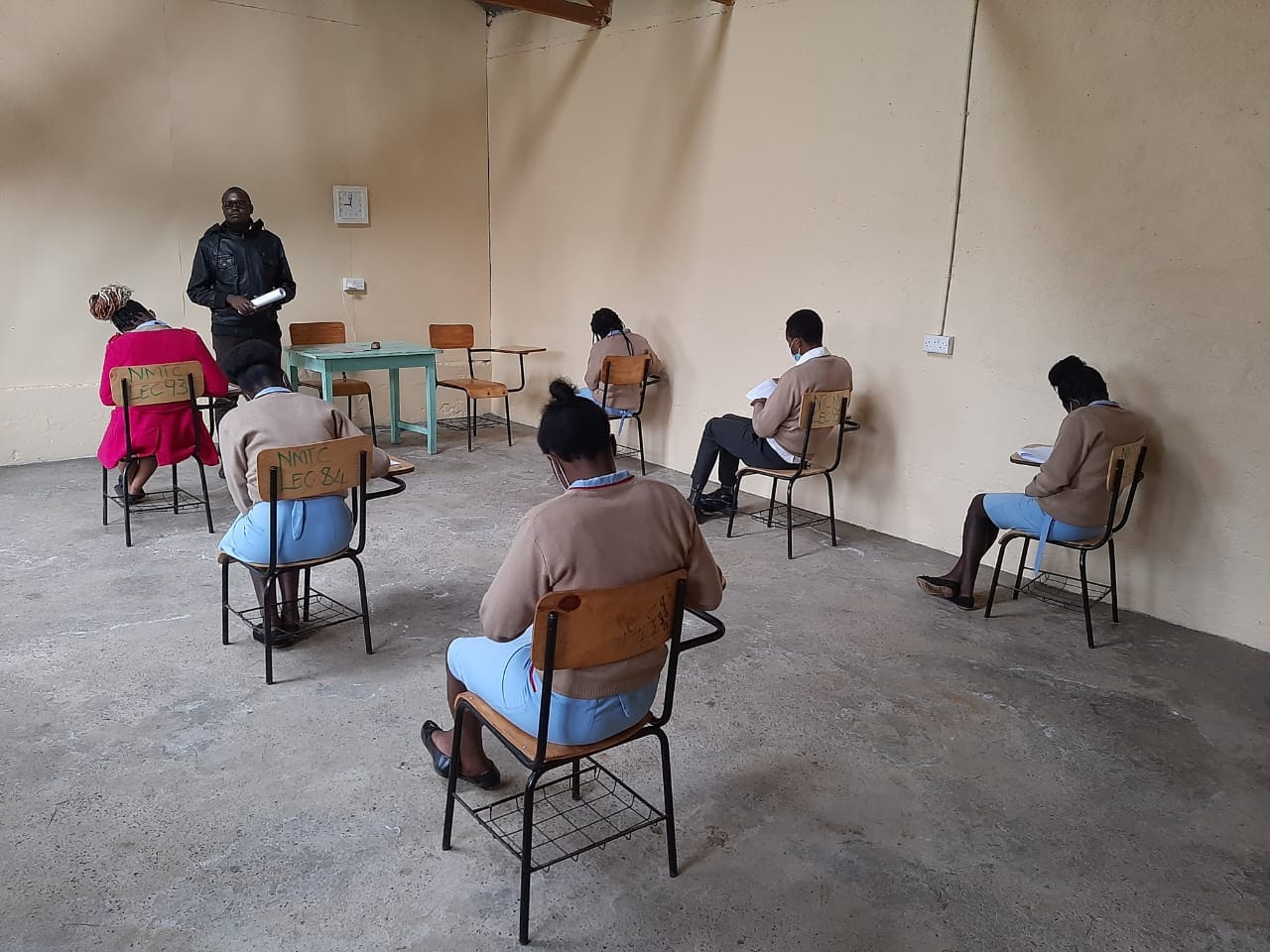
KNEC Opens Registration for Teacher Trainees’ Supplementary Assessments
Registration runs from 9 November to 15 December 2026, with assessments from 18 January to 12 February 2027
The Kenya National Examinations Council (KNEC) has launched registration of teacher trainees for the January/February 2027 supplementary assessments.
The exercise follows the high number of referrals in the 2026 Diploma in Primary Teacher Education (DPTE) results, which showed that thousands of trainees now need a second chance to qualify.
The details are in a circular dated 3rd November 2026, signed by KNEC Chief Executive Officer Dr. David Njengere and addressed to principals of Diploma Teacher Training Colleges (Ref: KNEC/GEN/AA/TEAM/REG/SUP/2026/01).
It sets out who may register, when, how much they will pay, and which documents colleges must submit.
Why the Supplementary Assessments Are Being Offered
According to the circular, KNEC received a formal request from the Kenya Teachers Colleges Principals Association.
The association asked the Council to consider administering supplementary assessments to trainees referred in previous assessments, so that those affected can meet the requirements for graduation scheduled for March 2027.
The request comes as colleges deal with a large backlog. The registration follows the heavy failures recorded in teacher training colleges (TTCs) by the 2023 DPTE cohort in their 2026 results.
While the new programme takes centre stage, the older one is still working through its backlog. Retakes are currently ongoing for candidates referred in the 2025 results.
Who Can Register
KNEC has said trainees wishing to resit must register for the 2027 January/February Teacher Education supplementary assessments in three categories:
- Diploma in Primary Education (DPTE)
- Diploma in Secondary Teacher Education (DSTE)
- Diploma in Early Childhood Teacher Education (DECTE)
The circular adds a second group. Trainees who missed the 2026 July Year One and Year Two College Based Assessments (CLBAs) will also be allowed to sit them during the January/February 2027 administration.
These CLBAs apply to two programmes: the Diploma in Primary Teacher Education Preprimary and Primary (DTE PP&P) and the Diploma in Secondary Teacher Education (DSTE).
Eligibility is strict. Only trainees who were referred in previous assessments may register.
Key Dates
Registration will run from 9th November to 15th December 2026. The Council will then administer the supplementary assessments from 18th January to 12th February 2027.
Individual timetables will be released once registration is complete.
Principals have a further deadline. By 30th December 2026, they must submit the required documents, including evidence of fee payment, to KNEC.
What Trainees Must Sit
Registered trainees must sit both the College Based Assessments (CLBA) and the Summative assessments, as guided by the timetable for each. Trainees should therefore not assume that only the failed component will be tested.
Rules for Small Colleges
The circular also addresses colleges with few candidates. These are the conditions:
- A college with fewer than five trainees cannot register as an independent assessment centre. It is advised to identify an approved assessment centre with more than ten trainees and register its trainees there.
- Assessment centres with fewer than ten trainees will be hosted in KNEC-approved colleges that have more than ten trainees during the administration of the assessments.
Affected trainees may therefore have to sit their assessments away from their own colleges. Principals of small institutions should start making arrangements early.
Fees and Payment
The supplementary assessment registration fee is Ksh. 7,200 per trainee, payable in one instalment. Trainees referred in Practicum pay an additional Ksh. 5,000 for the practicum assessment.
The process works as follows:
- After registering trainees, the principal generates an invoice for the assessment fee.
- Payment is made through e-Citizen, using a link provided on the registration platform.
- Principals submit evidence of payment, with the corresponding invoice, by 30th December 2026.
Documents Principals Must Submit
At the end of the registration period, principals must deliver the following to New Mitihani House, South C, Teacher Education Assessments Management Services Department:
- Nominal rolls signed by each teacher trainee and the principal
- Medical reports for trainees living with disability
- Evidence of assessment fee payment and the corresponding invoice, by 30th December 2026
The Scale of the Problem
The 2026 DPTE results showed an unusually high number of referrals. According to KNEC, 9,792 of the 25,098 candidates (39.02%) were referred. That is nearly four in ten candidates nationally.
Mathematics was the leading cause, with 6,815 failures, followed by Kiswahili with 2,988 and English with 1,514.
Dr. Njengere has attributed the failures to lowered entry grades. Following the PWPER recommendations, entry into TTCs was lowered from a C (plain) to attract more trainees, which allowed candidates with D and E in Mathematics to join.
In the 2026 class, only 14.52% had a C or above in KCSE Mathematics, while 68.27% had D to E. The diploma curriculum remains demanding. This was the first cohort admitted under the new entry requirement.
The picture is notable alongside the new DTE PP&P, which restores the minimum KCSE mean grade of C (plain).
Whether that standard resolves the problem will only be clear once the first cohort’s results are released.
Colleges Hit Hardest
Referrals were not spread evenly. Mosoriot TTC recorded the highest number, with 927 of 944 candidates referred and only 17 set to graduate.
St. Mark’s Kigari TTC in Embu followed with 541 of 860, then Kaimosi TTC with 442 of 665, Asumbi TTC with 422 of 750, and Thogoto TTC with 367 of 755. Mateco TTC recorded 354 referrals, while Borabu TTC had 341 of 627.
Other colleges fared far better. Moi TTC referred only 14 of 513 candidates, Galana TTC in Kilifi 15 of 128, and Kibabi Diploma TTC 18 of 171.
The wide variation raises questions. If entry grades were the main driver, a more uniform pattern would be expected.
College-Level Guidance: The Kwale TTC Example
Because registration depends on the college, referred candidates have been told to approach their institutions directly for guidance on how to apply and what fees to pay.
One example is Kwale TTC. On 22 October 2026, the college issued a notice (Ref: KWL/TTC/26/10/001) to referred DPTE trainees on resit fees and the payment deadline for the November 2026 sitting. The notice was signed by Chief Principal and Board Secretary Mrs. Hellen N. Machuka, HSC.
It sets a resit fee of Ksh. 1,000 per referred subject, plus an administration fee of Ksh. 3,700. The administration fee is made up of:
- Basic fee: Ksh. 1,200
- Fee per subject: Ksh. 1,000
- Search fee: Ksh. 500
- Facilitation fee: Ksh. 2,000
The notice directs payment through the college’s official Paybill, advises trainees to pay before the registration window closes, and names the College Secretary as the contact for clarification.
Fees, payment channels and procedures can differ from one college to another. Kwale TTC’s notice only illustrates the kind of guidance being issued.
What Referred Trainees Should Do
Trainees with referrals should contact their own colleges for guidance, and in the meantime:
- Confirm exactly which subjects they were referred in.
- Ask the administration or accounts office for the fees payable and the official payment method.
- Establish the deadline for payment and registration.
- Keep proof of payment and request a receipt or acknowledgement.
- Avoid paying through unofficial channels or individuals.
- Begin revising early, especially in Mathematics, where failures were highest.
Missing the window could mean waiting for another sitting, which delays graduation, certification and entry into the teaching service.
What Principals Should Do
For principals, the circular means a tight schedule. Registration opens on 9th November and closes on 15th December, leaving about five weeks to identify eligible trainees, register them, generate invoices, and collect and remit fees through e-Citizen.
Nominal rolls need signatures from both trainees and principals, and medical reports for trainees with disabilities must be ready. Everything must reach New Mitihani House by 30th December.
Principals of small colleges face an extra task: finding a suitable host centre, so their trainees are not left out.
Looking Ahead
The supplementary window is a lifeline for thousands of trainees whose graduation depends on clearing their referrals.
With the assessments running from 18th January to 12th February 2027, the results would be ready in time for the March 2027 graduation the circular refers to.
For the trainees themselves, the message is simple: act early, confirm details with your college, pay only through official channels, and use the weeks before January to prepare.
For the sector, the bigger question remains whether restoring the C (plain) entry requirement under the new DTE PP&P programme will prevent a repeat of this year’s referral numbers.