


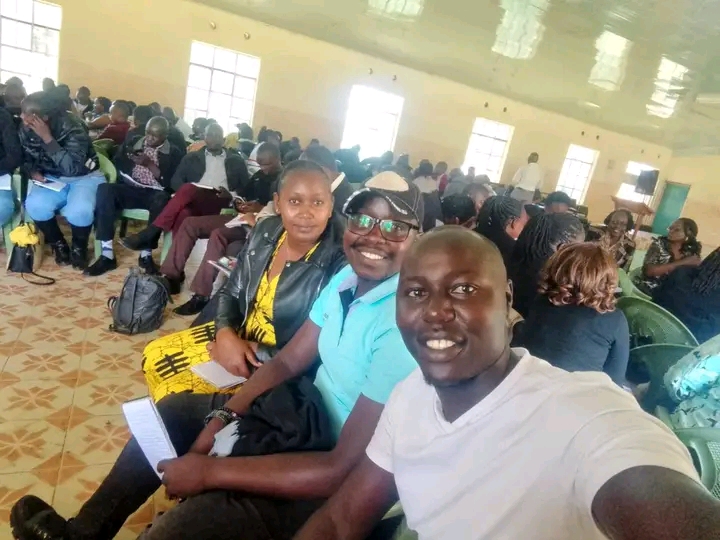
Countdown to Grade 10: KEMI Announces Massive Capacity-Building Programme Starting August 17
Introduction: A Critical Turning Point for Kenya’s Education Landscape
As Kenya’s Competency-Based Education (CBE) architecture continues its systematic progression through the educational cycle, the nation stands on the threshold of a monumental milestone.
The second cohort of learners under the 2-6-3-3-3 system is rapidly finalizing their lower secondary education, making the upcoming transition into Senior School a matter of intense national focus.
In response to this critical juncture, the Kenya Education Management Institute (KEMI)—the premier capacity-building agency of the Ministry of Education—has announced a comprehensive, nationwide training programme tailored for Heads of Institutions (HoIs) and Junior School teachers in charge of career guidance.
This sweeping national initiative, officially communicated through a circular dated 11th August, 2026, and signed by KEMI Chief Executive Officer Dr. Maurice Odondo, is structured to run concurrently across various regional and virtual nodes from 17th August to 12th September, 2026.
Coming hot on the heels of the Ministry of Education’s announcement regarding the rollout of the Grade 10 selection exercise, this training program aims to bridge the gap between policy formulation and practical classroom execution.
It empowers educators with the strategic insights required to navigate senior school pathways, track choices, and subject combinations.
Official Circular Details
The blueprint for this massive national undertaking was formally dispatched to all field administration officers via an official dispatch. The complete text of the governing document outlines the operational framework of the exercise:
KENYA EDUCATION MANAGEMENT INSTITUTE
MTAMA ROAD, PARKLANDS
P.O. BOX 62592-00200
NAIROBI
REF: KEMI/03/KPEEL/EXT/VOL. I/031
DATE: 11 TH AUGUST, 2026
ALL COUNTY DIRECTORS OF EDUCATION
RE: TRAINING SCHEDULE FOR CAPACITY BUILDING OF JUNIOR SCHOOL LEADERS AND TEACHERS ON CAREER GUIDANCE AND SENIOR SCHOOL PATHWAY AND TRACK CHOICES FOR GRADE 7, 8 AND 9
Reference is made to the above.
Enclosed herewith please find the training Schedule for training from $17^{th}$ August to $12^{th}$ September, 2026.
We also wish to inform that;
- Transport reimbursement and lunch allowance will be provided to all the participants.
- The HoIs training will be held virtually and this shall be communicated separately.
For further enquiries, please contact Elijah Karimi at 0721331037.
Thank you for your continued support.
DR. MAURICE ODONDO
CHIEF EXECUTIVE OFFICER
The Strategic Imperative: Why This Capacity Building Matters Now
The timing of KEMI’s nationwide capacity-building programme is far from coincidental. With schools scheduled to reopen for the crucial third term, the Ministry of Education has slated the commencement of the Grade 10 selection exercise for 24th August, 2026.
This selection process will determine the future trajectories of millions of learners as they branch into Senior School pathways.
Under the design of Competency-Based Education, Senior School represents upper secondary education spanning Grades 10, 11, and 12.
At this juncture, students are required to align their academic and technical inclinations with three core pathways:
- Science, Technology, Engineering, and Mathematics (STEM)
- Social Sciences
- Arts and Sports Science
Choosing a pathway is not merely an administrative formality; it is a definitive career-shaping decision that dictates university placement, tertiary training, and eventual entry into the modern labor market.
Historically, the Kenyan education system faced widespread criticism for funneling students through a rigid, academic-only pipeline that frequently ignored individual aptitudes, creative talents, and vocational competencies.
The CBE framework seeks to reverse this paradigm by embedding robust career guidance right from Junior School (Grades 7, 8, and 9).
However, translating this visionary curriculum into practical execution has placed immense pressure on school administrators and teachers.
Many educators find themselves grappling with how to effectively profile learners, interpret formative and summative assessment data, and counsel anxious parents and students.
KEMI’s intervention is designed to demystify these processes, ensuring that Heads of Institutions and designated career teachers possess uniform, standardized competencies to steer the selection exercise without friction.
Emerging Anxieties and Institutional Realities: The 8-School Selection Cap
Even as preparations for the national training gather momentum, anxiety is mounting within educational circles regarding the modalities of the upcoming selection process.
Reliable reports indicate growing concern among parents, teachers, and education stakeholders that Grade 9 learners transitioning this year may be restricted to selecting only eight senior schools, a notable departure from the pioneer cohort who enjoyed the privilege of choosing up to twelve schools.
While educational authorities maintain that streamlining choices helps manage placement logistics, curb institutional congestion, and align selections with actual regional capacity, stakeholders worry about the psychological and competitive impact on learners.
Limiting options to eight schools heightens the stakes for every single choice made. If a student or career teacher miscalculates a learner’s competitive index or misunderstands specific school requirements within a chosen pathway, the margin for error becomes razor-thin.
This exact policy shift underscores why KEMI’s training schedule is indispensable. Career guidance teachers are expected to act as frontline counselors who can look at a learner’s portfolio—capturing academic performance, co-curricular talents, and behavioral inclinations—and counsel them on realistic, strategic school selections that maximize their placement success within the newly imposed caps.
Comprehensive Regional Training Venues and Schedules
To ensure seamless execution across the republic, KEMI has structured a meticulous venue-by-venue schedule categorized by regions and counties.
Below is the comprehensively organized breakdown of the training timetable:
1. Coast Region
The Coast Region schedule covers multiple counties, addressing logistical nuances across distinct educational zones.
Kilifi County
- Number of Training Venues: 1
- Covered Sub-Counties/Zones: Malindi (C), Kaloleni, Rabai, Kauma, Ganze (B)
- Selected Venue: St. Johns Girls Secondary School Kaloleni
- Dates: 27th ~ 28th August, 2026
Mombasa County
- Number of Training Venues: 1
- Covered Sub-Counties/Zones: Changamwe, Jomvu, Kisauni, Likoni, Mvita, Nyali
- Selected Venue: Aldina Visram Secondary School
- Dates: 31st August ~ 1st September, 2026
Kwale County (Batch 1)
- Number of Training Venues: 1
- Covered Sub-Counties/Zones: Lunga Lunga, Msambweni
- Selected Venue: Ramisi Boys Secondary School
- Dates: 3rd ~ 4th September, 2026
Kwale County (Batch 2)
- Number of Training Venues: 1
- Covered Sub-Counties/Zones: Matuga, Shimba Hills
- Selected Venue: Matuga Girls High School
- Dates: 7th ~ 8th September, 2026
Kwale County (Batch 3)
- Number of Training Venues: 1
- Covered Sub-Counties/Zones: Samburu, Kinango
- Selected Venue: Samburu Boys High School
- Dates: 10th ~ 11th September, 2026
- Total Regional Venues (Batch Summary): 8 Venues across designated coastal hubs.
Taita Taveta County (Batch 1)
- Number of Venues / Schools: 1
- Covered Sub-Counties/Zones: Taveta
- Selected Venue: Timbila Day Primary & Junior School
- Dates: 17th ~ 18th August, 2026
Taita Taveta County (Batch 2)
- Number of Venues / Schools: 1
- Covered Sub-Counties/Zones: Mwatate, Voi, Wundanyi/Taita
- Selected Venue: CDF Hall Mwatate
- Dates: 20th ~ 21st August, 2026
2. Eastern Region
The vast Eastern Region features extensive administrative clusters, distributed across multiple counties to accommodate high numbers of junior schools.
Makueni County
- Number of Venues / Schools: 6
- Sub-County/Zones: Kibwezi
- Selected Venue: St. Joseph Girls Kibwezi
- Dates: 24th ~ 25th August, 2026
- Sub-County/Zones: Makindu, Nzai B
- Selected Venue: Makindu Boys High School
- Dates: 27th ~ 28th August, 2026
- Sub-County/Zones: Makueni, Kathonzweni, Nzai A
- Selected Venue: Makueni Boys High School
- Dates: 31st August ~ 1st September, 2026
- Sub-County/Zones: Mbooni East
- Selected Venue: Nduluku Boys High School
- Dates: 3rd ~ 4th September, 2026
- Sub-County/Zones: Kilungu, Mukaa
- Selected Venue: ABC Mayani Secondary School
- Dates: 7th ~ 8th September, 2026
- Sub-County/Zones: Mbooni West
- Selected Venue: Mbooni Girls High School
- Dates: 10th ~ 11th September, 2026
Machakos County (Mwala Cluster)
- Number of Venues / Schools: 1 (Part of Makueni/Machakos cross-schedule)
- Sub-County/Zones: Mwala
- Selected Venue: AIC Makutano Boarding Primary School
- Dates: 14th ~ 15th September, 2026
- Total Venues in Sub-Cluster: 9 designated sites.
Tharaka Nithi County
- Number of Venues / Schools: 2
- Sub-County/Zones: Ciakariga, Tharaka South & North
- Selected Venue: Tharaka Boys High School
- Dates: 17th ~ 18th August, 2026
- Sub-County/Zones: Meru South, Igamba Ngombe
- Selected Venue: Kathituni Primary Boarding School
- Dates: 20th ~ 21st August, 2026
Embu County
- Number of Venues / Schools: 3
- Sub-County/Zones: Embu East, Embu North, Embu West
- Selected Venue: Embu County Secondary School
- Dates: 24th ~ 25th August, 2026
- Sub-County/Zones: Mbeere North
- Selected Venue: Siakago Girls High School
- Dates: 27th ~ 28th August, 2026
- Sub-County/Zones: Mbeere South, Mwea
- Selected Venue: Mutus (Mutithi/Mutira cluster context)
- Dates: 31st August ~ 1st September, 2026
Machakos County (Extended Sub-Counties)
- Number of Venues / Schools: 3 additional venues
- Sub-County/Zones: Masinga
- Selected Venue: Masinga Girls High School
- Dates: 3rd ~ 4th September, 2026
- Sub-County/Zones: Yatta
- Selected Venue: Holy Ghost Mission Secondary School
- Dates: 7th ~ 8th September, 2026
Full list to be provided later. Keep checking for changes
Operational Logistics and Financial Provisions
Recognizing the logistical hurdles of attending physical professional development sessions in an era of constrained institutional budgets, KEMI has instituted clear support mechanisms:
Transport Reimbursement and Lunch Allowances: To guarantee high attendance rates and ease financial burdens on participating teachers, KEMI has explicitly confirmed that all physical participants will receive official transport reimbursement and daily lunch allowances. County Directors of Education have been instructed to ensure that eligible teachers receive their allocations promptly as per state guidelines.
Virtual Protocol for Heads of Institutions (HoIs): Given their heavy administrative responsibilities at the school level—particularly during the reopening period—Heads of Institutions will not report to physical regional clusters for this specific training. Instead, their capacity-building sessions will be conducted virtually, with distinct connection guidelines and schedules communicated separately by the institute.
Inquiries and Administrative Support: For any clarifications regarding venue adjustments, eligibility, or resource materials, school heads and teachers have been directed to contact Elijah Karimi via telephone at 0721331037.
The Broader Context of Career Guidance under CBE
The transition from the 8-4-4 system to Competency-Based Education fundamentally transforms how students perceive success.
Under the old system, career choices were typically deferred until the completion of secondary school (Form Four), where students were filtered largely through the lens of overall aggregate grades (mean scores).
Under the CBE framework, career exploration starts much earlier. Junior School (Grades 7, 8, and 9) serves as the laboratory where students discover their core proficiencies. The curriculum is built around formative assessments that track talents, creative capabilities, technical skills, and intellectual strengths.
However, studies and stakeholder feedback have highlighted that many primary and junior schools lack formal, structured career guidance desks. Teachers often juggle multiple teaching loads without specialized training in psychometric profiling or labor market forecasting.
KEMI’s current intervention addresses this vacuum directly. By training teachers in charge of career guidance alongside school principals, the Ministry of Education ensures that schools can establish functional career offices capable of:
- Interpreting learner portfolios accurately.
- Counseling parents who may harbor traditional biases against vocational, technical, or arts-based career pathways.
- Aligning student choices with national developmental goals, such as Vision 2030 and the growing demand for technical skills in manufacturing, digital technology, and agricultural modernization.
Stakeholder Reactions and Recommendations Moving Forward
Education sector unions, head association representatives, and civil society groups have largely welcomed the KEMI training initiative, describing it as timely and indispensable.
Representatives from the Kenya Secondary School Heads Association (KESSHA) and junior school coordinators have emphasized that preparing educators before the portal for Grade 10 selection opens on 24th August prevents chaotic decision-making and minimizes placement appeals.
Nevertheless, experts have raised a few operational recommendations to ensure optimal impact:
Digital Infrastructure Resilience: Given that Heads of Institutions will participate virtually, reliable internet connectivity and power stability in rural and semi-arid counties must be guaranteed to prevent disenfranchisement of school heads operating in remote zones.
Continuous Mentorship: Stakeholders note that a single multi-day training workshop, while robust, must be supplemented by continuous online resource toolkits and peer-support networks hosted on platforms like the Kenya Education Management Institute portal.
Intensive Parent Sensitization: Teachers trained by KEMI must be equipped with communication strategies to cascade accurate information down to parents. Since parents play a decisive role in final pathway choices, minimizing household confusion regarding the 8-school selection cap will dictate how smoothly the transition unfolds.
Conclusion
As the clock ticks toward 17th August, 2026, when the first cohort of physical workshops kicks off across Taita Taveta, Tharaka Nithi, and other regional centres, the education sector finds itself at a historic watershed.
The rollout of Grade 10 selection under the Competency-Based Education framework is no longer a distant vision; it is an immediate reality requiring meticulous coordination, visionary leadership, and specialized guidance.
Through Dr. Maurice Odondo’s leadership, the Kenya Education Management Institute has once again stepped forward to provide the intellectual and structural scaffolding needed to steer this transition.
By addressing both the administrative acumen of school heads and the technical competencies of career guidance teachers, KEMI is laying the groundwork for a smooth, transparent, and student-centered Senior School selection process.
With logistics ironed out, venues gazetted, and allowances provisioned, the onus now rests on County Directors of Education, school principals, and designated teachers to seize this opportunity.
By fully engaging with the curriculum from 17th August to 12th September, 2026, Kenyan educators will successfully guide their Grade 9 learners past the hurdles of the 8-school selection cap and securely onto the pathways that define the nation’s educational future.