


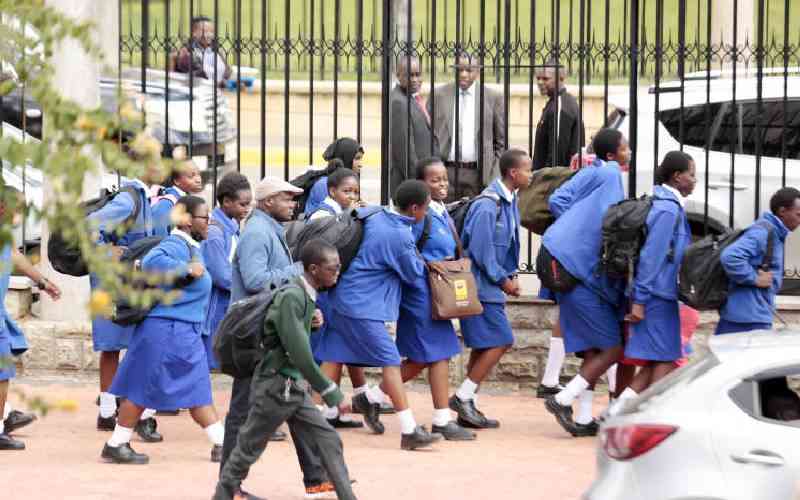
Escalating Unrest: Secondary Schools Consider Early Mid-Term Closures Amid Nationwide Security Crisis
NAIROBI, Kenya — June 4, 2026 — A wave of instability is sweeping through Kenya’s secondary school sector, forcing school administrators and the Ministry of Education into a high-stakes standoff.
As reports of student unrest, arson plots, and violent riots multiply daily, a growing number of school principals are quietly contemplating shuttering their institutions ahead of the official mid-term break to avert further destruction of property and loss of life.
The Conflict Over the Academic Calendar
According to the official Ministry of Education academic calendar, secondary schools are scheduled to observe their mid-term break from June 24 to June 28, 2026.
While many institutions had initially planned to proceed with normal learning until June 19, the current atmosphere of volatility has made that timeline increasingly untenable for many boards of management.
Faced with the daunting prospect of managing volatile student bodies, principals find themselves in a precarious position.
The Ministry of Education has issued stern warnings, cautioning that any early closure of schools is illegal unless explicitly sanctioned by relevant authorities.
Yet, for administrators on the ground, the fear of a fire outbreak or a student riot often outweighs the fear of bureaucratic reprimand.
A Pattern of Volatility: Recent Closures
The current term has been marred by a series of unprecedented disruptions.
What began as isolated incidents has spiraled into a nationwide concern, affecting prestigious national schools and regional institutions alike.
The following schools are among those that have been forced to suspend operations—some temporarily, others indefinitely—due to safety and security breaches:
| School | County | Reason for Closure |
|---|---|---|
| Lenana School | Nairobi | Student unrest/security concerns |
| Alliance High School | Kiambu | Fire incident in mattress store |
| Tambach Boys High | Elgeyo Marakwet | Indefinite closure after strike |
| Barding Boys High | Siaya | Thwarted arson plot |
| Naivasha Girls High | Nakuru | Investigations into arson plot |
| Kapkolei Girls High | Nandi | Nighttime riot |
| State House Girls | Nairobi | Student unrest |
| Lang’ata High School | Nairobi | Security concerns/unrest |
| Mary Mount Secondary | Various | Safety concerns |
| Saseta Girls High | Various | Security threats |
The Shadow of the Utumishi Girls Tragedy
The climate of fear was drastically heightened on May 28, when a catastrophic dormitory fire at Utumishi Girls Academy claimed the lives of 16 students and left dozens more hospitalized with severe injuries.
The tragedy sent shockwaves across the nation, exposing potentially fatal flaws in boarding school safety protocols.
Preliminary investigations have suggested that emergency exits may have been padlocked at the time of the fire, violating basic safety standards.
In a swift response, the government dissolved the school’s Board of Management.
With several students now in police custody facing arson-related charges, the incident has become a grim catalyst for the current wave of caution gripping administrators across the country.
Underlying Drivers of Unrest
While the immediate response to these incidents has been the closure of schools, educational experts and stakeholders are urging a deeper look into the root causes of this unrest.
The recurring nature of these protests and arson attempts points to systemic frustrations among the student population. Among the complaints frequently cited by students are:
Deteriorating Living Conditions: Reports of overcrowding in dormitories and poor sanitation.
Food Quality and Quantity: Discontent regarding menu variety and nutritional standards.
Administrative Grievances: Perceived high-handedness in disciplinary measures and lack of channels for student feedback.
Academic Pressure: Intense stress related to the rigorous curriculum and the high stakes of national examinations.
Mental Health Gaps: A critical lack of professional counseling and emotional support systems within the school environment.
A Call for Urgent Intervention
The prospect of early closures poses a significant risk to the completion of the syllabus and the stability of the academic year.
Education stakeholders are calling for a multi-sectoral approach to address the crisis.
“Closing schools early is a reactive measure that does not solve the underlying psychological and structural issues,” noted one education analyst.
“We need to bridge the communication gap between students and management. If students feel heard, they are less likely to resort to the destructive behaviors we are witnessing today.”
As the Ministry of Education continues to monitor the situation, parents are being urged to remain vigilant and maintain open communication with their children.
For now, the education sector remains in a state of high alert, balancing the necessity of uninterrupted learning against the urgent mandate to ensure the safety of every student within the school gates.
With investigations into the recent fire incidents ongoing, the status of schools across the country remains fluid. The Ministry of Education is expected to release further guidelines regarding the mid-term break in the coming days.
As we look at the rising tension in our schools, what do you think is the most effective way for school administrations to address student grievances before they escalate into violence?